 English
 Español
 Inquiry
The cutting tool market is changing quietly. Buyers are becoming more careful when selecting suppliers, especially for tools used in machining processes where consistency matters. Instead of only comparing appearance or purchase cost, many companies are paying closer attention to production ability, product stability, and manufacturing control.
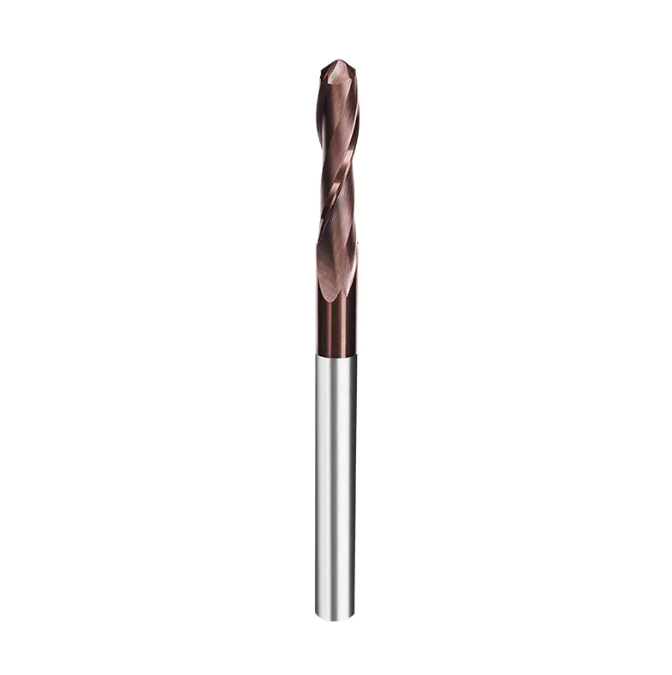
Among different cutting tools, solid carbide drills have become an important category for many industrial applications. Their production requires careful handling because the final product is influenced by many small details. A slight difference in manufacturing conditions can affect the user experience.
For this reason, solid carbide drill manufacturers are putting more attention into precision and quality control. These two areas are not simply production goals. They have become part of how manufacturers build trust with customers and adapt to changing market expectations.
Precision in tool manufacturing isn't a new priority, but what counts as "precise enough" has shifted. Buyers used to be satisfied if a drill met the basic spec sheet. Now they're asking for something harder to deliver — a tool that performs the same way on cut number 500 as it did on cut number one.
Getting there means paying attention to every stage a solid carbide drill passes through before it ships. Material prep, forming, surface treatment, final inspection — each one leaves a mark on the finished tool, and none of them can really be treated as an afterthought. Skip corners in one stage, and it tends to show up as inconsistency further down the line, usually right when a customer notices.
Manufacturers who take this seriously understand that the small stuff adds up fast. A production environment that stays consistent run after run cuts out a lot of the random variation that otherwise creeps into the process — and that consistency is exactly what separates a dependable tool from a hit-or-miss one.
This matters most for companies buying tools on a regular basis. When quality doesn't fluctuate from batch to batch, those buyers aren't stuck troubleshooting surprises — they can just get on with their own production instead of second-guessing every new shipment.
There's a flexibility angle here too. Precision isn't only about hitting a tight tolerance — it also gives manufacturers more room to maneuver. A company with genuinely strong process control can tweak a design or adjust a production method for a specific industry's needs without worrying that quality will slip in the process. That kind of control is what lets a manufacturer serve very different customers without treating consistency as a trade-off.
Quality control is more than checking a finished product. It starts before production begins and continues throughout the entire manufacturing process.
Many manufacturers are moving toward a more complete quality management approach. Instead of finding problems at the final stage, they try to identify possible issues earlier.
A typical quality process may include several areas:
| Production Area | Quality Consideration |
|---|---|
| Material preparation | Checking material condition and suitability |
| Manufacturing process | Maintaining stable production steps |
| Surface finishing | Reviewing appearance and consistency |
| Final inspection | Confirming product condition before shipment |
This approach helps manufacturers understand where improvements can be made. It also creates better communication between different departments.
For buyers, strong quality control often represents a supplier's production ability. A manufacturer that pays attention to details usually has clearer internal processes and better control over product consistency.
In the competitive cutting tool market, quality management has become a way for companies to show reliability.
Raw material picks set the baseline for any carbide drill's performance, and each material's unique traits change how the finished tool holds up out on the shop floor.
Producers of solid carbide drills prioritize material stability from the very start of development. Picking a well-matched raw stock lays a solid groundwork for steady, reliable output all the way through production.
That said, high-grade material alone won't guarantee uniform quality. How the stock is managed throughout manufacturing carries just as much weight. Storage environments, pre-processing routines and in-line production checks all shape the final tool's consistency.
More manufacturers now recognize this clear link between raw materials and finished product performance. They know reliable quality control kicks in long before blanks ever go through grinding and shaping.
This mindset has reshaped their whole production strategy. Rather than only relying on end-of-line inspections to catch flaws, brands build connected workflows where every step reinforces the next.
For machine shops buying these drills, partnering with suppliers that follow this full-process system means far more consistent tool performance batch after batch.
The relationship between buyers and manufacturers is changing. Many companies are no longer interested in short-term purchasing decisions only. They are looking for suppliers who can provide stable support over time.
A reliable tool supplier can help reduce uncertainty. When customers receive consistent products, they can organize their own production plans more effectively.
This is one reason why solid carbide drill manufacturers are paying more attention to communication. Understanding customer needs has become an important part of product development.
Different industries may have different expectations. Some customers may need standard solutions, while others may require adjustments based on their working environment.
Manufacturers that listen carefully can respond more effectively. They can use customer feedback to improve product design, production methods, and service processes.
The market is also becoming more focused on value rather than simple cost comparison. Buyers often consider factors such as delivery reliability, product consistency, and communication quality.
Tool makers are pouring more effort into streamlining their production systems these days. Tightly structured workflows let them keep product quality steady while cutting down wasted time and labor.
Most factories have started reworking their internal workflows from the ground up. They track how raw materials flow through each station, watch staff handle every machining step, and standardize how inspection data gets logged and stored.
Written, straightforward rules cut down on messy inconsistencies on the floor. Every team member knows exactly what tasks they're responsible for, and weak links in the production line become simple to spot and fix.
A lot of value also comes from listening to long-tenured staff. Experienced operators pick up on tiny, easy-to-miss details that shift final tool performance, and their hands-on insights guide smarter process adjustments.
Regular cross-team training and open communication have become standard practice too. When production crews, quality controllers and sales teams exchange feedback freely, bottlenecks and flaws get resolved much quicker.
This kind of close internal collaboration builds a far more stable, efficient production setup overall.
Inspection is a key part of manufacturing. It provides information about whether production processes are working as expected.
For solid carbide drill manufacturers, inspection is not only about finding defects. It is also about understanding production conditions and making adjustments when necessary.
Regular checks allow manufacturers to track changes and improve stability. This helps create a more predictable manufacturing process.
Inspection also supports customer confidence. Buyers want to know that suppliers have systems in place to manage quality.
A strong inspection approach can include different stages:
Production monitoring
Manufacturers observe production conditions and review possible changes.
Appearance evaluation
The surface condition and overall appearance are checked carefully.
Consistency review
Products are compared to confirm stable manufacturing results.
Feedback improvement
Information from inspection is used to improve future production.
This continuous process allows manufacturers to move from simple checking toward long-term improvement.
Customer expectations are influencing the direction of the industry. Buyers are becoming more informed and often want deeper information before making decisions.
They are interested in understanding how products are made, how suppliers manage quality, and how manufacturers handle different requirements.
This change encourages companies to become more transparent. Manufacturers are paying more attention to communication, documentation, and customer support.
Customization is another area receiving attention. Different applications may require different approaches. Flexible production capabilities allow manufacturers to serve a wider range of customers.
At the same time, buyers are looking for suppliers who can maintain stable quality over time. A single successful order is no longer enough to build a strong business relationship.
Long-term cooperation depends on trust, communication, and consistent performance.
Choosing a suitable manufacturer requires more than checking product information. Buyers often need to look at the supplier's overall ability.
Several points can help during evaluation:
Manufacturing experience
Experience helps suppliers understand different customer situations. Companies with practical knowledge may respond more effectively to specific requirements.
Quality management methods
A clear quality system shows how seriously a manufacturer treats product consistency. Buyers can learn a lot from how suppliers organize production and inspection.
Communication ability
Good communication makes cooperation easier. Suppliers that understand customer needs can provide more suitable suggestions.
Production flexibility
Different projects may require different solutions. Manufacturers with flexible production abilities can adapt more easily.
Continuous improvement mindset
The manufacturing industry continues to change. Suppliers that regularly review their processes are often better prepared for future needs.
These factors provide a broader view of a manufacturer's capability. They help buyers move beyond simple product comparison.
The focus on precision and quality control is becoming a normal part of the cutting tool industry. As customers become more careful, manufacturers are responding by improving their production systems and strengthening quality awareness.
Solid carbide drill manufacturers are not only producing tools. They are building complete manufacturing processes that support consistency, communication, and long-term cooperation.
The future development of the market will continue to depend on careful production management, attention to customer needs, and the ability to adapt to changing expectations.
Cooperate with us now
contact Us
Characteristic Industrial Park, Furong Town, Yueqing City, Zhejiang Province, China.
+86-13757799073
+86-13587713956

Wholesale Carbide Rotary Burs Factory