 English
 Español
 Inquiry
Supply stability rarely makes headlines, but ask anyone running production and they'll tell you it's always on their mind. When supply gets uneven, everything downstream shifts — production plans get reshuffled, delivery windows slip, and what starts as a small hiccup can ripple through an entire operation.
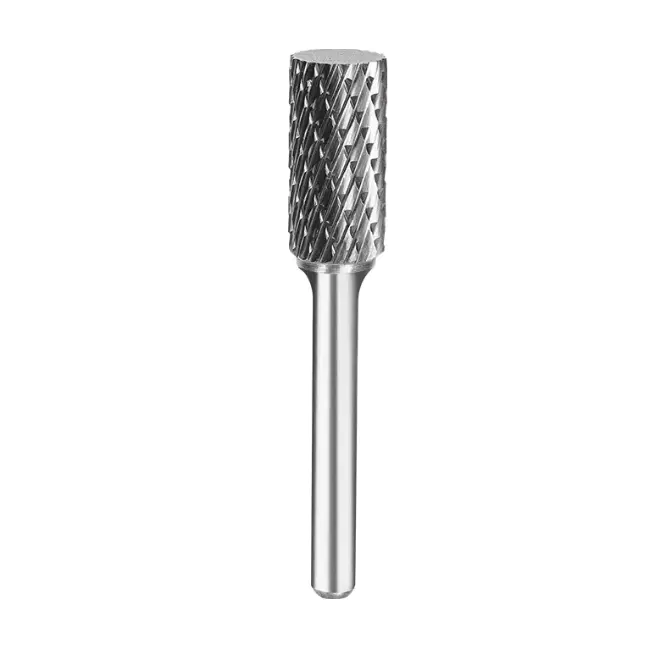
For buyers sourcing carbide rotary burrs, these problems tend to show up quietly at first. An order lands a few days later than promised. One batch feels slightly different from the last. A simple question takes three days to get answered instead of one. None of these seem huge on their own, but stack them up over time and they start to matter a lot.
That's part of why more companies are rethinking how they source — moving past layered trading setups and looking at direct factory cooperation instead. Which raises a fair question: does working directly with a carbide rotary burrs factory actually lead to steadier supply?
On paper, supply stability sounds straightforward. In practice, it's held together by a dozen moving parts that all need to stay in sync. Slow down just one of them, and the effect spreads faster than most people expect.
A few things tend to drive whether supply stays stable:
Add multiple intermediaries into the mix, and suddenly all of this gets harder to manage. Every extra layer is another place where a message can get slightly reworded, a deadline can get misread, or a small misunderstanding can quietly grow into a bigger one.
Factories sit much closer to where the actual work happens. That position gives them more direct control over certain variables. It won't eliminate every uncertainty out there, but it does cut down on the number of places where things can go sideways.
Go straight to a carbide rotary burrs factory, and the whole communication structure shifts. Instead of information bouncing through several hands before it reaches anyone, it moves in something closer to a straight line.
That change shows up in a few concrete ways:
Fewer people in the loop usually means faster decisions. That doesn't magically make everything simple — but it does make the whole thing more transparent. Buyers end up with a much clearer picture of what's actually happening to their order.
Factories typically build their production schedules around confirmed timelines. When communication runs directly, they can match their internal workflow to what customers actually need — and that alignment tends to cut down on surprises later.
Consistency and stability go hand in hand more than people realize. If every batch comes out a little different, someone has to spend time checking, correcting, adjusting — and that slows everything down.
Steady production, on the other hand, makes output far more predictable. Less rework means fewer delays, which means delivery times actually hold.
Here's how that relationship plays out:
| Production Condition | Effect on Supply Flow |
|---|---|
| Stable Output | Smooth Delivery Rhythm |
| Irregular Variation | Increased Adjustments |
| Clear Process Control | Predictable Scheduling |
| Unclear Procedures | Uncertain Timelines |
Factories that keep their internal processes tight and consistent tend to support steadier supply overall. And buyers working closely with them get a much better feel for exactly how that consistency gets achieved.
Nobody thinks about communication until it breaks down. But in a supply relationship, it's usually the thing that determines how fast a problem gets caught — and how fast it gets fixed.
In sourcing setups with lots of middlemen, a message might pass through three or four hands before it lands where it needs to. Each handoff adds a little delay. Sometimes the meaning shifts slightly along the way. Over time, those small shifts turn into real gaps in understanding.
Cut out the middle layers, and that distance shrinks. Questions get asked and answered without waiting on a chain of confirmations.
The payoff shows up in a few places:
Direct communication won't remove every challenge — but it makes the ones that come up a lot easier to handle. When both sides are upfront with each other, the whole process just gets more predictable.
Demand almost never stays flat. Orders spike out of nowhere or slow to a crawl without much warning, and that puts real strain on any supply chain.
Most factories work off structured production plans, but that doesn't mean they're rigid. When buyers have a direct line to the factory, changes can be raised and discussed well before they become urgent.
That flexibility can look like:
Handled well, this kind of flexibility actually reinforces stability instead of undermining it. It lets both sides adapt without throwing off the overall rhythm of the supply relationship.
None of this works without steady communication, though. When both sides genuinely understand what the other needs, adjustments start feeling like a normal part of the process — not a scramble every time something changes.
Good planning runs on reliable information. Without it, people end up guessing — and guessing tends to swing between too much inventory and not enough.
Factories that share real visibility into their production progress give buyers something solid to plan around.
That kind of transparency might look like:
With that information in hand, buyers can adjust their own plans well ahead of time instead of reacting after the fact. Less uncertainty, smoother operations.
There's a trust element here too. When a factory's processes are visible, expectations naturally become more realistic on both sides — and that steadiness carries the relationship forward.
One-off orders tend to focus only on the immediate need. Long-term cooperation works differently — it builds slowly, and it changes how both sides treat the relationship over time.
A few patterns tend to show up the longer a partnership runs:
The longer a factory works with a particular buyer, the better they understand that buyer's specific needs. That familiarity cuts down on misunderstandings and makes coordination during busy stretches much smoother.
Stable relationships tend to produce stable supply. Eventually, that connection between the two sides just becomes part of how the whole system runs.
How a factory organizes itself internally matters just as much as anything happening outside its walls. Supply outcomes aren't shaped only by external forces — a lot comes down to how production gets managed on the floor.
A few internal factors carry real weight:
Get these right, and production tends to move at a steady, predictable pace. Orders flow through without random interruptions along the way.
Buyers working directly with a factory get to see these patterns firsthand over time — and that gives them a much better read on how stable the relationship is likely to be.
Every extra layer in a supply chain adds complexity. Intermediaries can bring certain advantages, sure, but they also mean more steps between a question and its answer.
Cut some of those layers out, and a few things tend to improve:
Go straight to a carbide rotary burrs factory, and the whole supply path gets a lot more straightforward. That simplicity tends to produce more reliable outcomes overall.
A shorter chain won't guarantee stability by itself — but it definitely cuts down on the number of things that can go wrong.
Stability isn't just about what happens on the production floor. It's also about how well expectations get set — and managed — on both sides.
Vague expectations lead to mismatched timelines fast. Overly ambitious planning puts pressure on everyone involved. Realistic expectations, though, make cooperation a lot smoother.
Talking directly with a factory means delivery timing, order changes, and production capacity can all get discussed openly, instead of guessed at.
When what's expected actually matches what's possible, the whole supply process finds a better balance — and that balance is what holds up over the long run.
Honestly, it's both. A well-built process gives you consistency. A strong relationship gives you room to flex when things change.
Factories bring organized production systems to the table. Buyers bring clear communication and expectations grounded in reality. When both sides show up and do their part, stability stops being an accident and starts being something you can actually count on.
None of this is set in stone, either — it evolves. Every order, every conversation shapes how the next one gets handled. Seen that way, supply stability isn't really a fixed outcome at all. It's an ongoing process, built one interaction at a time.
Cooperate with us now
contact Us
Characteristic Industrial Park, Furong Town, Yueqing City, Zhejiang Province, China.
+86-13757799073
+86-13587713956

Wholesale Carbide Rotary Burs Factory