 English
 Español
 Inquiry
In many metalworking environments, the main shaping work does not fully define the final result. There is usually something left behind. A rough edge. A slightly uneven surface. A corner that does not feel quite right when touched.
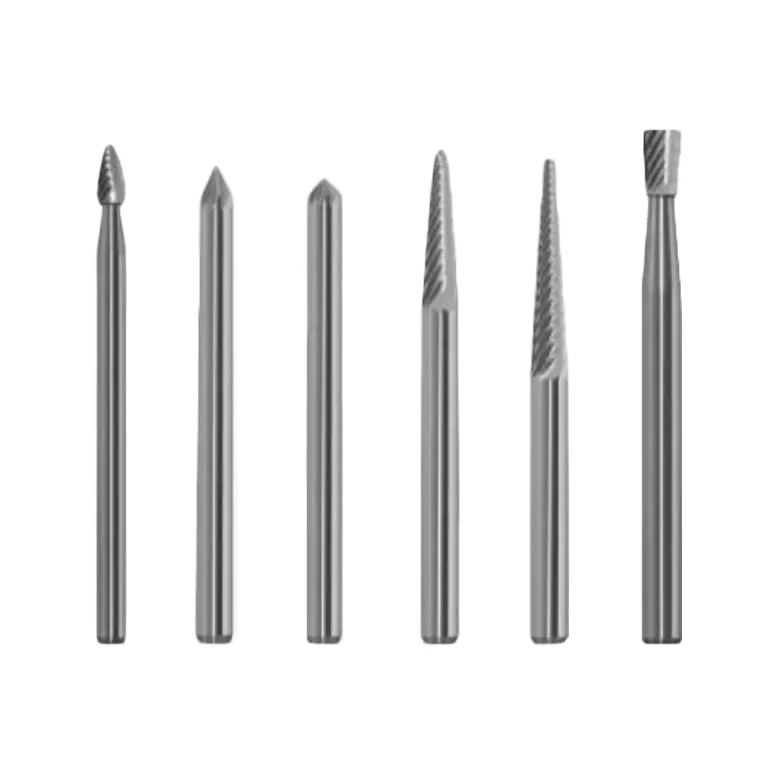
These small details are often where solid carbide burs come into use. Not as the main cutting tool, but as something that refines, adjusts, and quietly corrects.
Most metal parts go through several stages before they are considered usable. Cutting, forming, shaping. These steps handle the bulk of the work. Still, they rarely leave a surface exactly as needed.
At that point, the focus shifts. The task becomes more controlled. Less about speed, more about accuracy.
Solid carbide burs fit into this stage. They are used when only a small amount of material needs to be removed. Sometimes just a thin layer. Sometimes only a small point on the surface.
In practice, this kind of work cannot be rushed. A steady hand matters more than force.
Their presence is not limited to one type of job. In fact, they tend to show up in several situations, often near the end of a process.
Edges are a common example. After cutting, an edge may look fine but still feel sharp or uneven. A burr helps smooth it out, often in just a few passes.
Another case involves small leftover fragments. These are not always easy to see, but they can affect how parts fit together. Removing them improves both function and handling.
There are also moments when two surfaces meet but do not transition smoothly. The difference may be slight, yet noticeable. A burr can soften that transition.
And then there is correction work. A small mistake does not always require starting over. Sometimes, it only needs a careful adjustment. This is where precision tools become useful.
Their use is not limited to one stage of production. They appear in several points across the workflow.
Edge finishing
After cutting or shaping, edges may feel rough. Burs help smooth these areas without removing too much material.
Deburring work
Small fragments often remain after machining or cutting. These fragments can affect both appearance and function. Burs remove them with controlled motion.
Surface blending
When two surfaces meet, the transition may not be smooth. A burr can soften the transition and create a more uniform feel.
Detail shaping
Some parts include tight corners or curved features. Larger tools cannot reach these areas easily. Burs allow for detailed shaping in confined spaces.
Correction work
Minor errors happen. A surface may need slight adjustment. A burr allows for localized correction without reworking the entire part.
Not all materials respond in the same way, and this becomes clear during use.
On softer metals, removal happens quickly. It is easy to go too far if the pressure is not controlled. Many operators learn to ease off and let the tool do the work rather than pushing into the surface.
Harder metals feel different. The process becomes slower. The tool moves across the surface with more resistance, and each pass removes less material. This can actually help with control, as changes happen more gradually.
In both cases, the result depends heavily on handling. Angle, movement, and contact all play a role. Even a small shift in position can change how the surface looks.
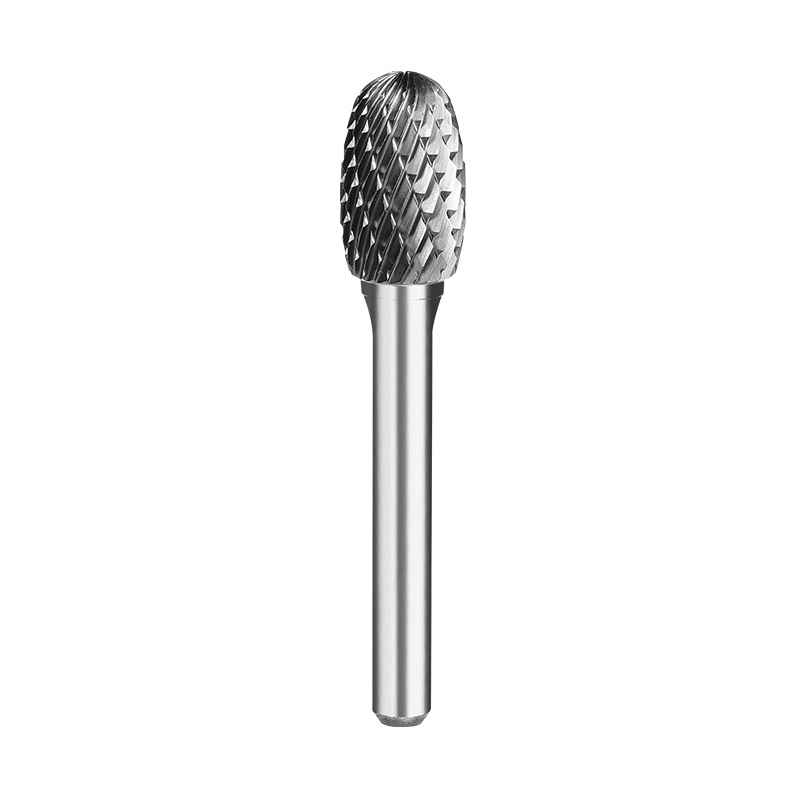
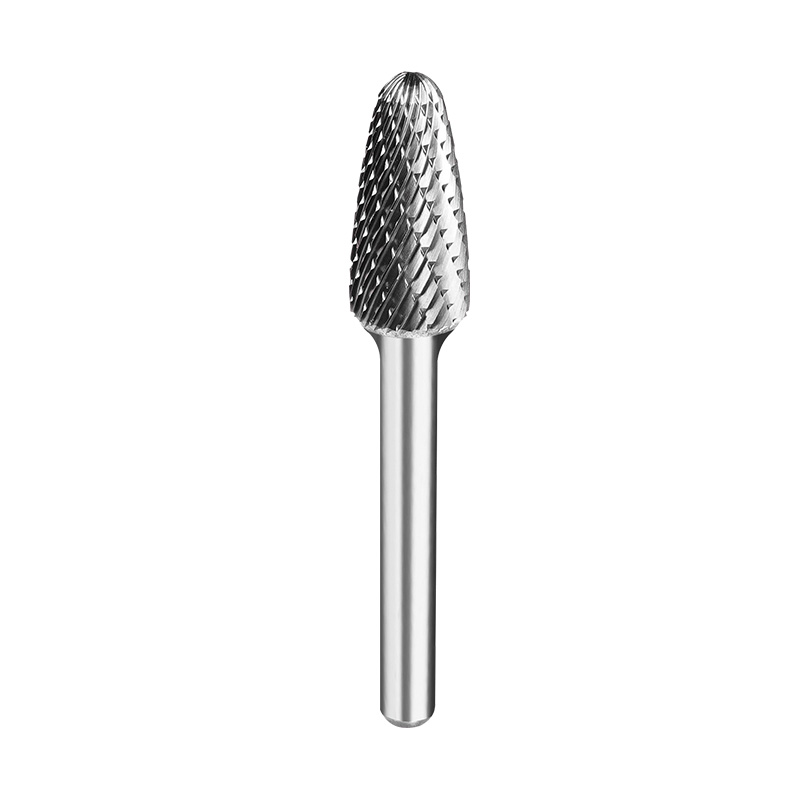
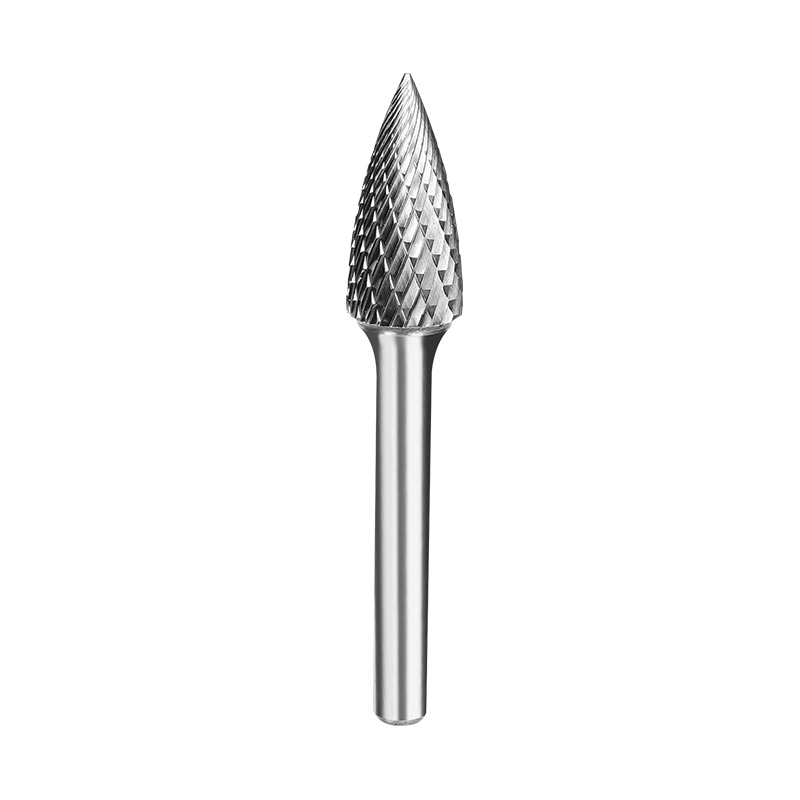
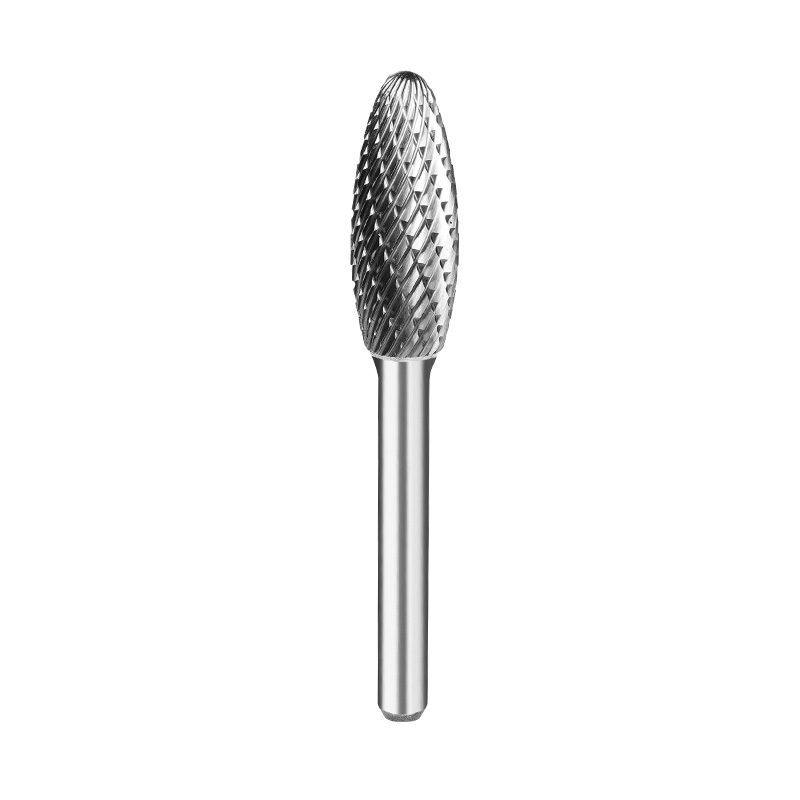
The shape of the burr decides where it can go and how it touches the surface.
Some shapes sit flat against wider areas. They are useful when working along edges or smoothing open sections. Others are designed for tighter spaces, where access is limited and movement is restricted.
A rounded tip tends to follow curves more naturally. It moves along the surface without digging in too sharply. On the other hand, a more pointed form can reach into narrow spots that would otherwise be difficult to access.
Here is a simple way to look at it:
| Shape | Common Use | How It Feels in Use |
|---|---|---|
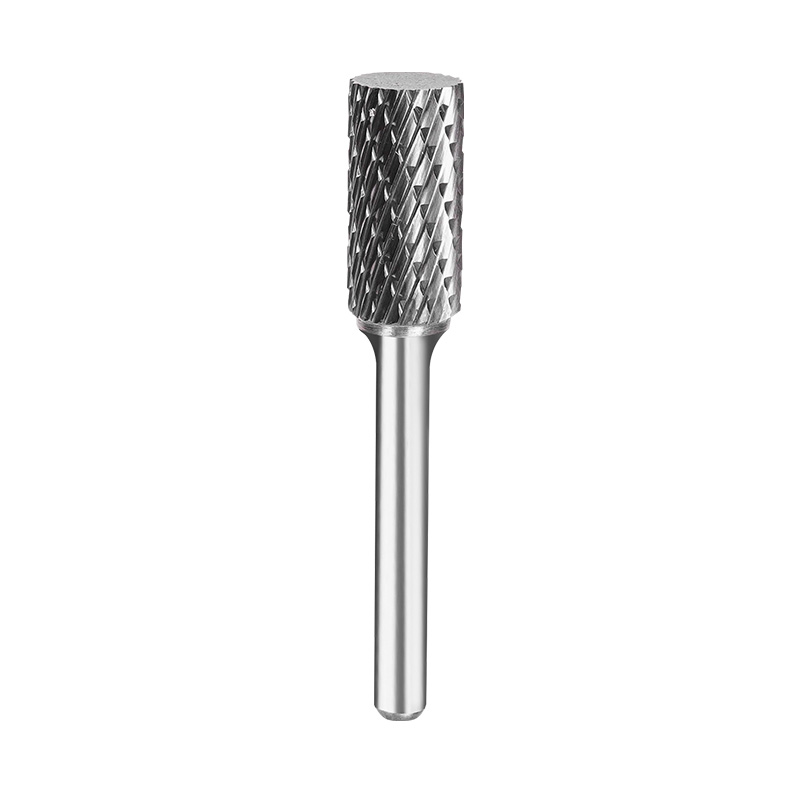
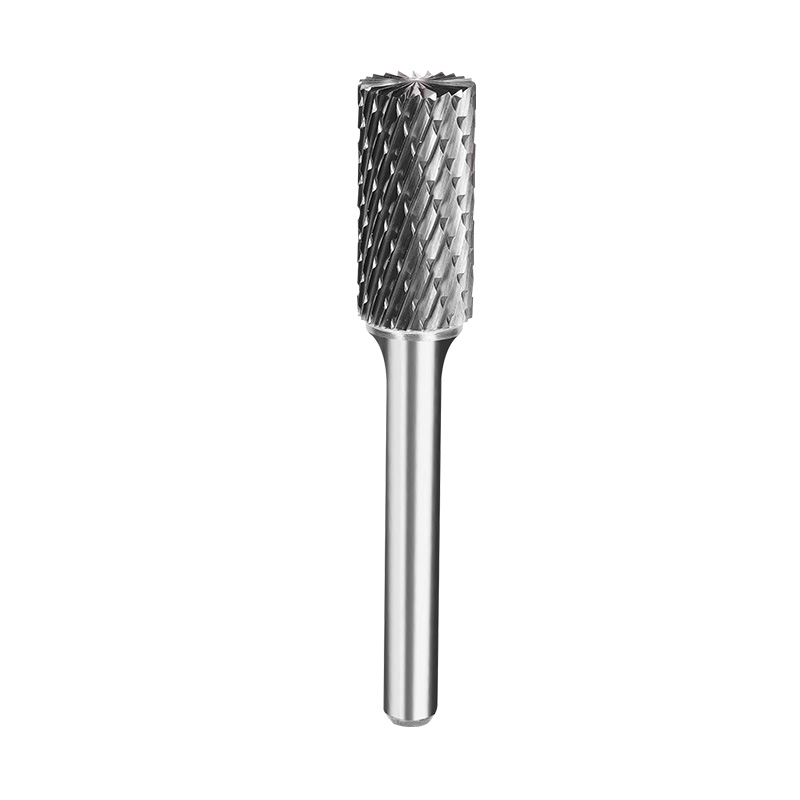
| Cylindrical | Edges and flat zones | Stable and even |
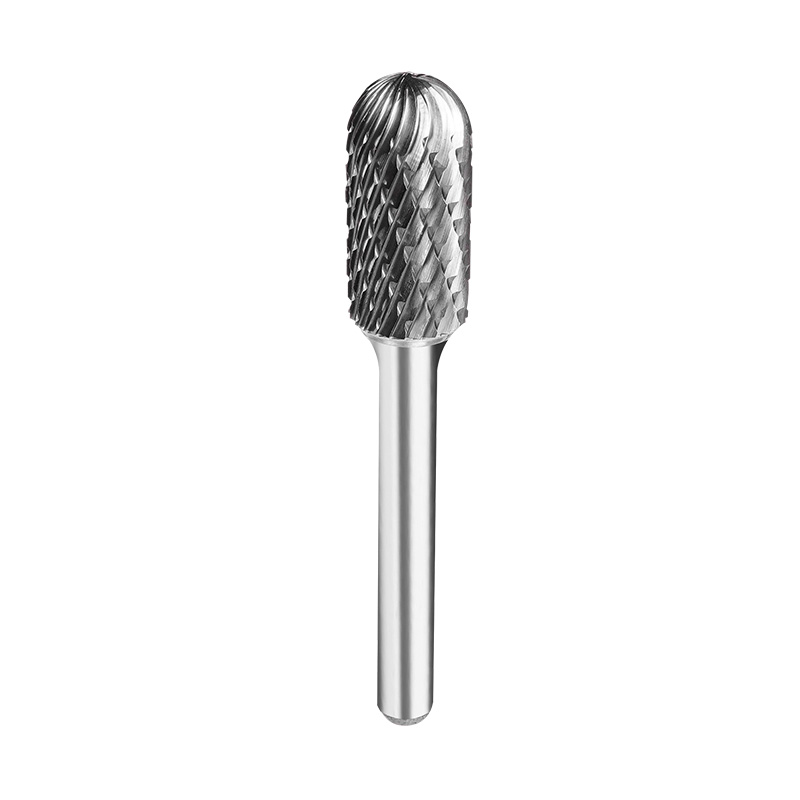
| Rounded | Curves and transitions | Smooth and flowing |
| Tapered | Narrow areas | More controlled depth |
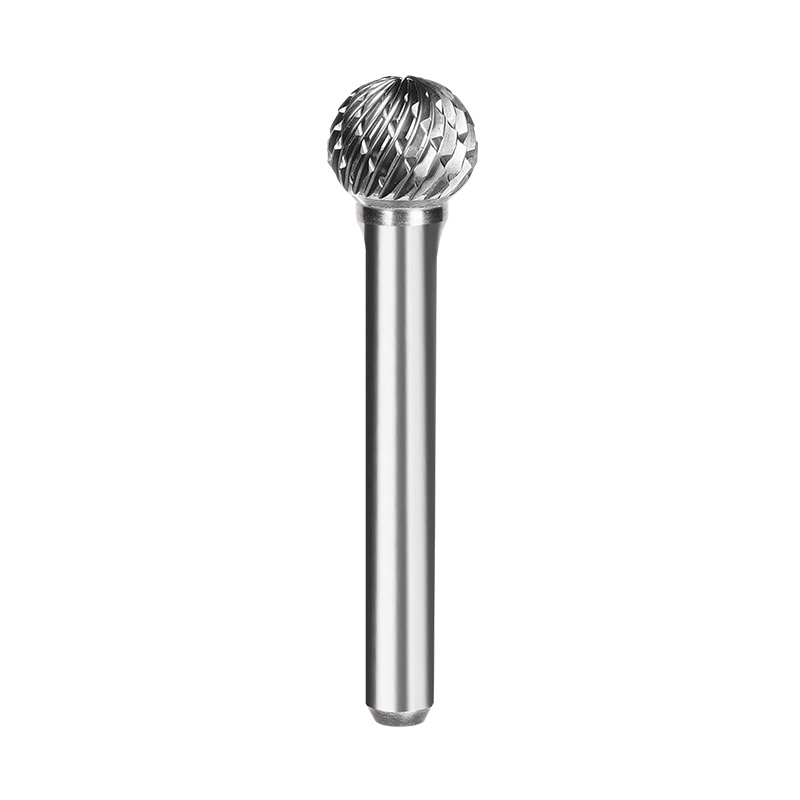
| Ball | Corners and inner curves | Soft shaping effect |
The choice is often practical. It depends on the shape of the part rather than anything else.
Manual use gives direct control, but it also demands attention.
The tool follows the movement of the hand. Small wrist motions guide the direction. Slight changes in angle can affect how much material is removed. It is not something that can be done carelessly.
There is also a kind of feedback during use. The surface gives a response. Sometimes it feels smooth, sometimes slightly resistant. Experienced users tend to rely on this feedback without thinking too much about it.
Short movements often work better than long ones. A few light passes can shape the surface more evenly than a single heavy motion.
In some environments, the process is less dependent on hand movement. Machines guide the tool along a set path.
This creates consistency. Each part receives similar treatment, which is useful when many pieces need to match.
Even so, the role of the burr does not change. It still performs detailed work. The difference lies in how the movement is controlled.
Machine setups reduce variation, but they also require careful setup. The position, angle, and path must be considered in advance.
Surface quality is not always about appearance. It also affects how parts behave when assembled.
A rough area may cause friction. A small irregularity may prevent proper contact between components. These issues are not always visible, but they can become noticeable later.
Using a burr helps refine these areas. It removes minor inconsistencies and creates a more uniform surface.
Sometimes the goal is not to make the surface shiny. It is simply to make it consistent. Even texture can be more important than visual finish.
Working with solid carbide burs is not difficult, but it does require some awareness.
One common issue is applying too much pressure. This often leads to uneven results. The surface may end up with marks that were not intended.
Another challenge is keeping a steady angle. When the angle changes too often, the surface may become inconsistent. It takes a bit of practice to maintain control.
Tool condition also matters. Over time, the edges wear down. The tool still works, but the feel changes. It may require more passes to achieve the same result.
The surrounding environment has more influence than it may seem.
A clean surface makes the process smoother. Dust or residue can interfere with contact between the tool and the material.
Lighting also plays a role. Clear visibility helps detect small changes on the surface. Without it, it becomes harder to judge progress.
Even the way the tool is held can make a difference. A stable grip leads to more consistent movement.
Metalworking continues to change, but certain needs stay the same. Precision work does not disappear.
Solid carbide burs remain part of the process because they offer control. They allow adjustments without affecting the entire part.
They also fit into different types of workflows. Manual work, machine-guided processes, repair tasks. The same tool can be used in all of these, with slight changes in approach.
In many cases, it is not about replacing larger tools. It is about handling the details that larger tools leave behind.
Technique plays a quiet but important role.
A steady approach tends to produce better results. Not fast, not forceful. Just controlled movement across the surface.
Many users prefer short passes. This allows them to check the surface frequently and adjust as needed.
There is also a rhythm to the process. Move, check, adjust, then repeat. Over time, this becomes natural.
The tool responds to how it is used. In that sense, the final result is not only about the tool itself, but also about the person guiding it.
Cooperate with us now
contact Us
Characteristic Industrial Park, Furong Town, Yueqing City, Zhejiang Province, China.
+86-13757799073
+86-13587713956

Wholesale Carbide Rotary Burs Factory