 English
 Español

Thread production may look like a small part of manufacturing, but it can influence the way an entire component is designed and produced.
Threads are found in many mechanical parts. They connect components, support assembly, allow adjustment, and create removable joints. Although the final thread may occupy only a small area of a workpiece, producing it requires careful attention to the material, tool, machine, and intended use.
This is why thread production continues to change.
Traditional thread-making methods still have an important place in machining. At the same time, thread milling is receiving more attention in applications where manufacturers want greater flexibility in how threads are produced.
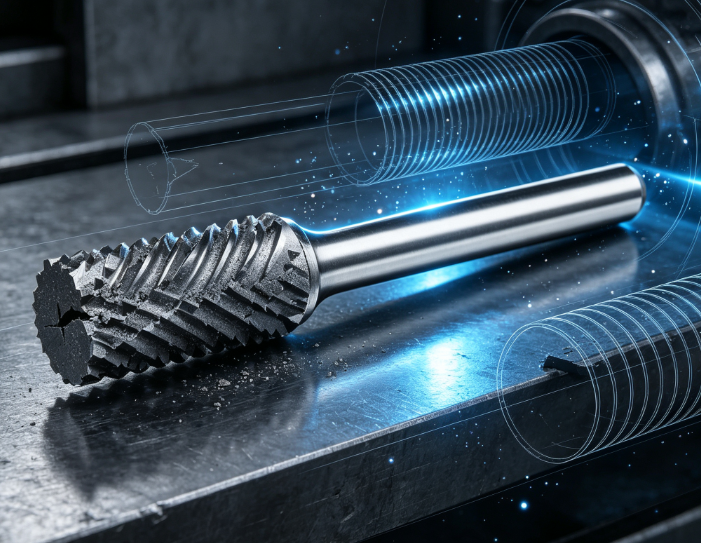
Solid carbide thread milling cutters are part of this shift. Made from a hard cutting material, these cutters are designed specifically for milling threads. Their use can change how manufacturers approach certain thread production tasks, particularly when a part requires controlled machining and careful tool selection.
The change is not about replacing every existing method.
It is about having another approach available when the production situation calls for it.
Why Is Thread Milling Receiving More Attention?
Thread production has traditionally involved several different methods. The suitable approach depends on the workpiece, machine, thread design, production process, and other factors.
Thread milling works differently from some conventional thread-making methods. Instead of relying on a tool that forms the entire thread through a single dedicated action, a milling cutter creates the thread through controlled movement inside the workpiece.
This gives manufacturers another way to approach internal and external threading tasks.
Flexibility is one reason for the growing interest.
A production shop may handle different components during the same working period. Each part can have its own thread requirements. Changing from one application to another may require a different tool strategy.
Thread milling can fit into this environment because the machining process is based on tool movement.
The approach can also be useful when the workpiece material or component design creates special requirements. Some parts are difficult to handle with a conventional threading approach. Others may require a thread that is positioned close to another feature.
The cutter therefore becomes part of a wider production decision.
| Thread Production Consideration | Why It Matters |
|---|---|
| Workpiece material | Different materials can respond differently to cutting |
| Thread design | The shape and location of the thread affect tool selection |
| Machine capability | The machine needs to support the intended movement |
| Production volume | Different production situations may require different tool strategies |
| Part design | Nearby features can influence how the thread is approached |
| Tool selection | Cutter material and design can affect the machining process |
This broader view helps explain why thread milling is becoming part of more machining discussions.
How Are Solid Carbide Thread Milling Cutters Changing Thread Production?
A solid carbide thread milling cutter combines the cutting function and tool body into one solid piece of carbide material.
This construction gives the cutter a different character from tools made with other material combinations.
For thread production, the tool needs to withstand repeated contact with the workpiece while maintaining its cutting shape. The material and design of the cutter therefore matter.
Solid carbide is widely associated with machining applications where hardness and wear resistance are important considerations. In thread milling, these characteristics can support applications that require a stable cutting edge over repeated operations.
The cutter's role is also closely connected with the machine.
A thread milling process depends on controlled tool movement. The machine guides the cutter along the intended thread path. This makes the relationship between the cutting tool and machine particularly important.
Manufacturers can therefore look at thread milling as a complete process rather than simply choosing a cutter.
The workpiece, machine, tool, cutting conditions, and production objective all need to work together.
This way of thinking can change the production workflow.
Instead of asking only which tool can produce a particular thread, manufacturers may also ask how the thread should be produced, how the operation fits into the machining sequence, and whether the selected tool can support other production requirements.
That is where Solid Carbide Thread Milling Cutters become relevant.
What Makes Thread Milling Useful for Different Production Needs?
One important feature of thread milling is its ability to support different thread production situations.
A machining shop may produce parts with different thread forms or sizes. It may also work with different materials or component designs. A flexible machining approach can make it easier to manage these changes.
Thread milling can be useful when the production process needs controlled tool movement.
It can also offer practical advantages when a workpiece contains more than one type of feature. A component may include holes, slots, surfaces, and threaded areas. The thread-making operation must fit into the wider machining process.
This can affect tool planning.
A manufacturer may need to consider how the thread operation connects with other machining steps. Tool changes, workpiece positioning, and production sequence can all influence the way the process is organized.
There are several situations where thread milling may receive consideration:
- Different thread requirements
A machining operation may involve more than one thread design. Tool selection can be planned around the actual requirements of the component. - Complex component designs
A thread may be located near another feature. The available machining space can influence which production method is practical. - Material changes
A shop may work with a variety of metals and other machinable materials. Tool material becomes an important part of process planning. - Flexible production
Manufacturers producing different parts may value a process that can adapt to changing machining tasks.
This does not make thread milling suitable for every application. It simply gives manufacturers another option when planning how a threaded feature should be produced.
How Does Tool Material Affect Thread Milling?
The cutting tool is in direct contact with the workpiece, so its material has an important role in the machining process.
Solid carbide is used in many cutting applications because of its hardness and ability to maintain a cutting edge under demanding conditions. For thread milling, this can be particularly relevant because the cutter must maintain its shape while creating the thread profile.
Tool material is not the only factor.
Cutter geometry also matters. The shape of the cutting area influences how the tool interacts with the workpiece. A suitable design needs to match the intended thread and machining process.
This means manufacturers should avoid treating material choice as an isolated decision.
A solid carbide cutter may be appropriate for one application and less suitable for another. The workpiece material, machine, thread design, production process, and expected tool use all need to be considered.
Maintenance is also part of the picture.
Cutting tools gradually experience wear during use. Changes in the cutting edge can influence the machining process. Regular inspection can help operators understand the condition of the tool and decide when replacement is appropriate.
For this reason, tool selection should involve both production requirements and day-to-day operating conditions.
A cutter is not simply a consumable item. It is part of the production process.
Can Thread Milling Help Manufacturers Handle Complex Threaded Parts?
Modern components are not always designed around simple shapes.
A single workpiece may include several functional areas. Some surfaces may need machining. Other sections may require holes or threads. Space around the thread area may also be limited.
These conditions can make thread production more complicated.
Thread milling provides a movement-based approach that can be useful for certain complex parts. Because the cutter follows a programmed path, manufacturers can plan the operation around the geometry of the workpiece.
This can be helpful when a thread is not located in an easily accessible area.
The approach can also support production planning for components with different threaded features. Instead of treating every thread as an entirely separate production problem, manufacturers can consider the relationship between tool selection, machine movement, and part design.
This is particularly relevant in CNC machining.
CNC equipment allows tool movement to be controlled according to a programmed machining process. Thread milling can make use of this capability to create the intended thread path.
The result depends on the complete machining setup.
A well-designed cutter cannot compensate for an unsuitable machine setup or an inappropriate process. The tool must be selected as part of the complete application.
This is why experienced machining teams tend to look at the whole operation rather than focusing on the cutter alone.
Why Is Flexibility Becoming Important in CNC Thread Production?
Production requirements are changing.
Many machining companies are not working with one simple product throughout the entire production process. They may handle different components, materials, and customer requirements.
This creates pressure for more adaptable production methods.
Thread milling fits this discussion because the machining process can be programmed around the intended thread path. The same general approach can be adjusted for different applications when the machine and tool are suitable.
This can influence how production teams organize their work.
Rather than building every threading task around one fixed method, manufacturers can compare available approaches and choose according to the actual part.
Flexibility can also matter during product development.
A component design may change after initial testing. A threaded feature may move. Another feature may be added nearby. When the machining process can accommodate changes, production planning may become easier to adjust.
Solid carbide thread milling cutters can form part of this flexible approach.
Their role is especially relevant when manufacturers want to connect tool selection with broader CNC production planning.
The objective is not simply to make one thread.
It is to create a machining process that works naturally with the component and the equipment around it.
What Should Manufacturers Consider Before Choosing a Solid Carbide Thread Milling Cutter?
Tool selection should begin with the application.
The workpiece material is an obvious consideration, but it is not the only one. Manufacturers also need to understand the thread design, machine capability, available working space, production sequence, and expected tool usage.
A useful selection process can include several questions.
| Selection Area | Key Question |
|---|---|
| Workpiece | What material will be machined? |
| Thread | What type of thread needs to be produced? |
| Machine | Can the machine support the required tool movement? |
| Cutter | Does the cutter match the intended application? |
| Production | How does thread milling fit into the machining sequence? |
| Maintenance | How will tool condition be checked during use? |
These questions can prevent tool selection from becoming a simple product comparison.
The cutter should fit the actual task.
For example, a tool selected for a general machining environment may not be the right choice for a particular material or thread design. Likewise, a suitable cutter still needs appropriate machine control and process planning.
Storage and handling should also receive attention.
Carbide tools can be durable during machining, but the cutting edges still need to be protected from unnecessary damage. Careful handling can help maintain the condition of the tool before it enters production.
Tool life should also be viewed realistically.
No cutting tool remains unchanged through unlimited use. Wear depends on the application and operating conditions. Monitoring the tool during production can help manufacturers understand when its condition is affecting the process.
Where Could Solid Carbide Thread Milling Cutters Find More Applications?
The use of thread milling is not limited to one manufacturing sector.
Any industry that produces machined components with threaded features may consider this approach when it matches the part and production process.
Applications can include machinery components, industrial equipment parts, automotive components, tooling, fixtures, and other precision-machined products.
The common factor is not the industry itself.
It is the need to create a threaded feature as part of a larger machining process.
As component designs become more varied, manufacturers may need more than one way to approach thread production. A conventional method may remain appropriate for one part, while thread milling may make more sense for another.
This creates a more diverse machining environment.
Solid carbide thread milling cutters can be considered where their material, design, and cutting characteristics match the requirements of the application. Their use can help production teams think about threading as part of the overall machining strategy rather than as an isolated operation.
That change in perspective is significant.
Thread production may involve only a small area of a workpiece, but the method used to create it can influence tool planning, machine operation, part handling, and production flexibility.
As CNC machining continues to support increasingly varied component designs, thread milling remains one of the approaches manufacturers can consider when planning how threaded features should be produced.