 English
 Español
 Inquiry
Aluminum is widely used in automotive components, aerospace parts, machinery, fabrication, electronics, and general metalworking because of its low weight, corrosion resistance, and good machinability. However, machining aluminum with a rotary burr can create a common problem: the cutting edges become packed with aluminum chips, the tool starts to generate excessive heat, and cutting performance drops quickly.
For manufacturers, fabricators, maintenance teams, and industrial tool distributors, this is more than a tool-maintenance issue. A loaded carbide burr can increase processing time, reduce surface quality, shorten tool life, and create inconsistent results between operators.
Choosing the right carbide burr for aluminum and controlling the cutting conditions can significantly reduce these problems. The key factors include burr geometry, cut style, rotational speed, applied pressure, lubrication, chip evacuation, and the condition of the rotary tool.
Aluminum is relatively soft and ductile compared with many ferrous metals. During rotary cutting, the material can produce chips that are more likely to smear or adhere to the cutting edges instead of breaking away cleanly.
When aluminum begins accumulating between the teeth of a carbide burr, the available flute space becomes smaller. This restricts chip evacuation and reduces the ability of the cutting edges to engage fresh material.
The process can then become self-reinforcing:
| Problem | What Happens During Cutting | Possible Result |
|---|---|---|
| Aluminum chip loading | Chips accumulate between cutting teeth | Reduced cutting efficiency |
| Restricted flute space | Chips cannot evacuate freely | More rubbing and friction |
| Increased friction | More heat develops at the cutting zone | Overheating and poor finish |
| Dull or loaded cutting edges | Less effective material removal | Operator applies more pressure |
| Excessive pressure | More friction and heat | Faster tool wear and inconsistent cutting |
This is why simply increasing pressure is usually not an effective response when a burr starts cutting poorly. The objective is to maintain an efficient cutting action and allow the burr to remove and evacuate chips continuously.
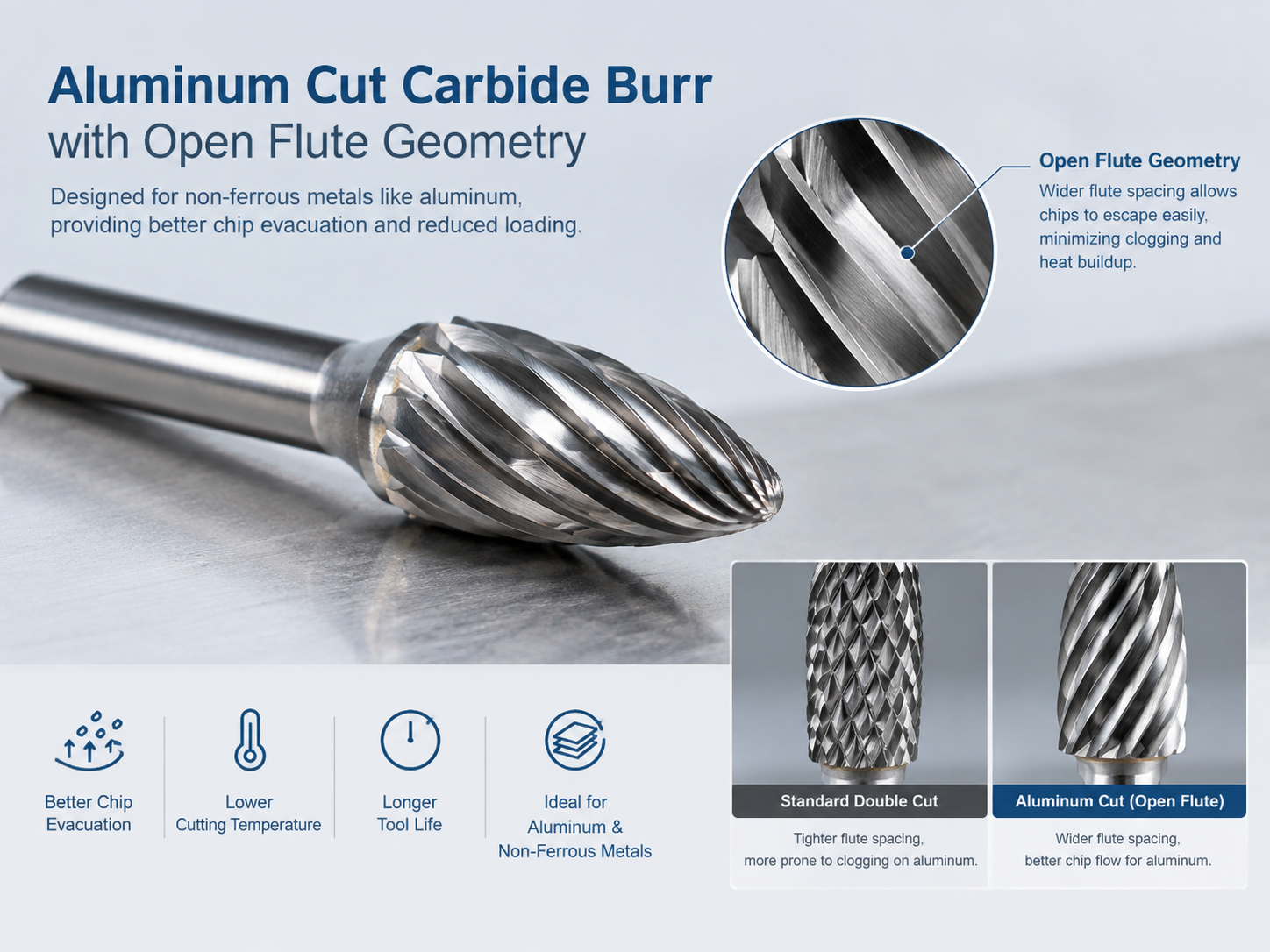
One of the most important decisions is the cut style.
A conventional double-cut carbide burr is widely used for steel, stainless steel, cast iron, and general deburring. Its multiple intersecting cutting edges can produce relatively small chips and a controlled cutting action.
Aluminum often benefits from a more open cutting geometry. Non-ferrous or aluminum-specific carbide burrs typically use wider and more open flutes to provide additional space for chip evacuation.
Manufacturers commonly describe these products as aluminum cut, non-ferrous cut, or similar terminology. United Abrasives, for example, describes its single-cut non-ferrous carbide burs as having a more open cut designed to reduce loading on softer materials and improve chip flow.
A practical selection approach is:
| Aluminum Application | Carbide Burr Characteristic to Consider |
| General aluminum deburring | Aluminum/non-ferrous cut |
| High material removal | Open flute geometry |
| Surface shaping | Suitable coarse or aluminum-specific cut |
| Tight areas | Small-diameter burr with appropriate shape |
| Hole enlargement | Cylindrical, ball, or other suitable profile |
| Weld cleanup on aluminum | Shape and cut selected according to access and weld geometry |
| Fine contouring | Smaller burr with controlled cutting geometry |
The exact choice should also consider the aluminum alloy, material thickness, required surface finish, amount of material to remove, and the type of rotary tool being used.
The terms single cut and double cut describe the arrangement of cutting teeth on the burr.
For many aluminum applications, an aluminum-specific single-cut or non-ferrous design is useful because the wider flute spacing provides more room for chips to leave the cutting zone.
A conventional double-cut burr can still be useful in certain situations, but it should not automatically be treated as the default choice for every aluminum operation.
The most important question is not simply whether a burr has one cut or two cuts. It is whether the complete cutting geometry is appropriate for the workpiece material and operating conditions.
For production applications, manufacturers should evaluate:
A burr that removes material aggressively but requires frequent cleaning may not deliver the lowest overall processing cost.
Rotational speed is one of the most important variables in carbide burr performance.
There is no single RPM that works for every carbide burr used on aluminum. A smaller cutting head can generally operate at a higher rotational speed than a larger head, while the manufacturer's maximum RPM rating must always be respected.
Published carbide burr speed charts show substantial differences according to burr diameter and material. For example, one industrial reference provides separate speed ranges for aluminum and other material groups, while another manufacturer provides specific maximum RPM values for individual non-ferrous burr sizes.
The following table is therefore best used as a starting framework rather than a universal production specification:
| Burr Head Diameter | General Principle |
|---|---|
| Small diameter | Higher RPM may be appropriate |
| Medium diameter | Moderate RPM is commonly used |
| Large diameter | RPM should be reduced |
| Long-shank burr | Follow the manufacturer's specific speed guidance |
| Aluminum-specific burr | Use the manufacturer's recommended operating range |
Always check three things before setting the machine:
The maximum RPM marked or specified for the carbide burr.
The rated speed of the die grinder, rotary tool, or spindle.
The manufacturer's recommended operating speed for the specific material and burr geometry.
A current industrial carbide burr guide also notes that head diameter has a direct effect on recommended RPM and that exceeding the rated speed can create a serious tool-failure risk.
Higher speed does not automatically mean faster production.
If the burr is operated at an unsuitable speed for its diameter, combined with excessive pressure or insufficient chip evacuation, heat can build up rapidly at the cutting zone.
Heat can make aluminum more prone to sticking to the cutting edges. Once material begins accumulating on the burr, the cutting action becomes less efficient. The tool may start rubbing against the workpiece, creating additional friction.
This can produce a cycle:
High friction → higher temperature → aluminum buildup → poorer cutting → more operator pressure → even more friction.
The correct operating condition should allow the carbide teeth to cut consistently while chips leave the cutting zone without excessive accumulation.
A common operator response to slow cutting is to push harder.
This can be counterproductive.
Carbide burrs are designed to remove material through their cutting edges. Excessive pressure increases contact force and can cause the tool to rub instead of cut efficiently. It can also increase vibration, heat, and mechanical stress on the burr and rotary tool.
A better approach is to use controlled pressure and allow the cutting geometry to do the work.
During production, operators should pay attention to several signs:
The burr cuts smoothly with consistent chip formation.
The tool does not require excessive force.
Aluminum does not rapidly accumulate between the teeth.
The surface does not show severe smearing or burning.
The tool remains controllable during the pass.
Vibration remains within an acceptable level.
If the burr suddenly requires significantly more pressure than it did at the beginning of the operation, inspect the cutting edges and chip-loading condition before simply increasing force.
Lubrication can help reduce friction and aluminum adhesion during rotary cutting.
Some carbide burr manufacturers and industrial application guides recommend using an appropriate lubricant or cutting aid when processing aluminum. Published guidance includes products such as beeswax or aluminum-compatible cutting fluids.
The exact product should be selected according to the work environment and subsequent manufacturing processes.
For example, if the aluminum component will later be painted, welded, bonded, anodized, or chemically treated, the production team should verify that the selected lubricant does not create a contamination problem.
A practical production procedure can include:
Clean the burr before starting.
Apply an appropriate amount of lubricant when required.
Begin cutting with controlled pressure.
Monitor chip evacuation.
Stop and clean the burr if loading becomes excessive.
Remove residual lubricant from the workpiece when required by the next process.
Lubrication should support the cutting process, not compensate for an unsuitable burr geometry or incorrect operating conditions.
Holding a carbide burr in one position for too long can concentrate heat in a small area.
For shaping and material removal, controlled movement helps distribute the cutting load across the working area. This is particularly important when removing larger amounts of aluminum.
Instead of forcing the burr deeply into one location, operators can use controlled passes and progressively remove material.
For example, when enlarging an aluminum opening:
Start with a stable entry point.
Use light, controlled passes.
Keep the burr moving.
Check the shape frequently.
Avoid burying the entire cutting head unnecessarily.
Finish with lighter passes when dimensional accuracy and surface quality matter.
This technique also helps reduce sudden grabbing and makes the process easier to control.
Carbide burr shape is another important selection factor.
Different profiles provide different levels of access and control.
| Burr Shape | Typical Aluminum Application |
|---|---|
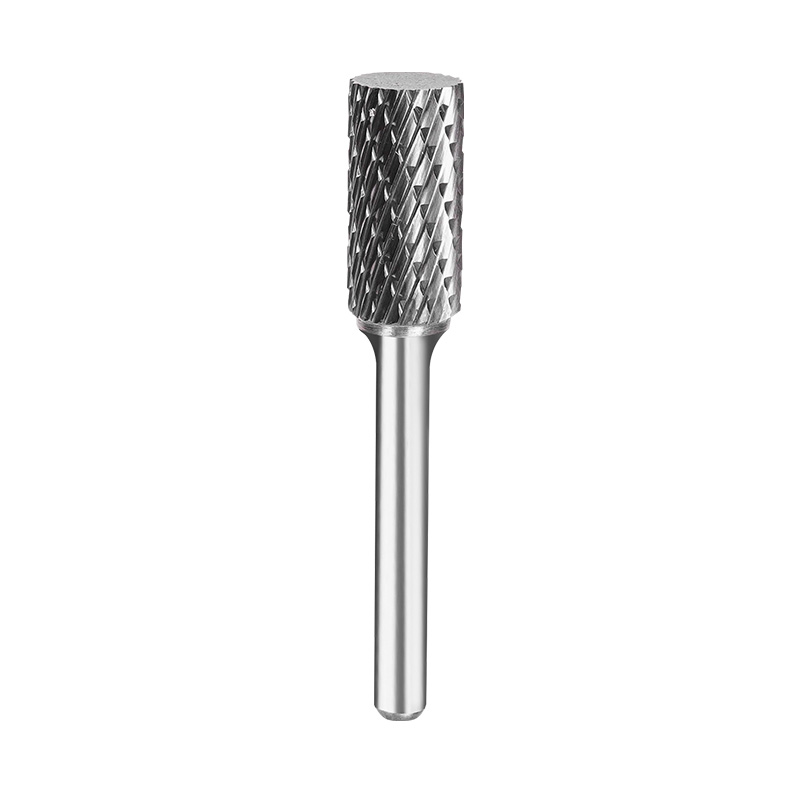
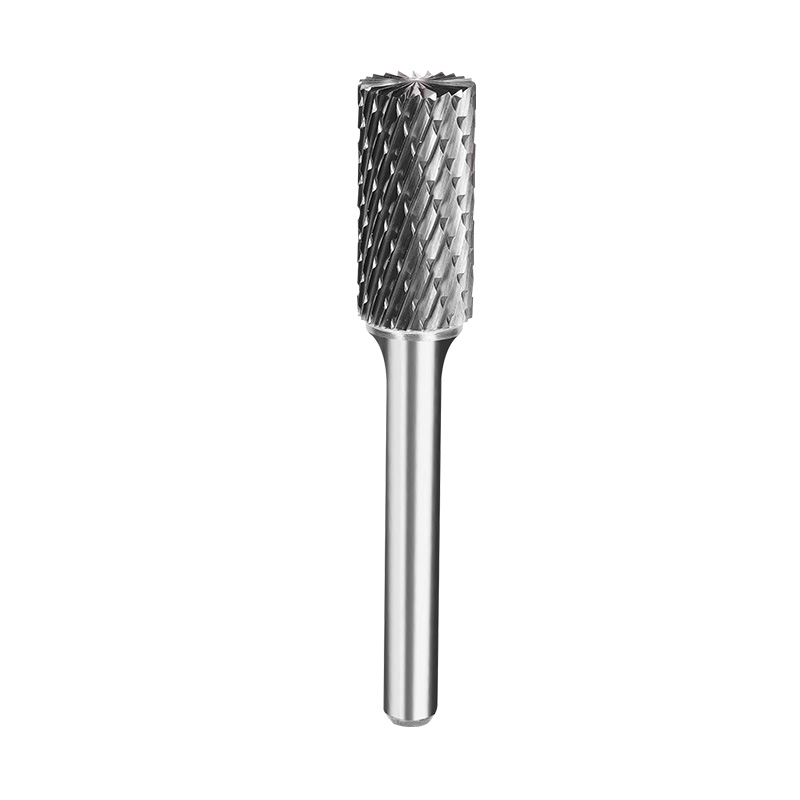
| Cylindrical | Flat surfaces, slots, edges, general material removal |
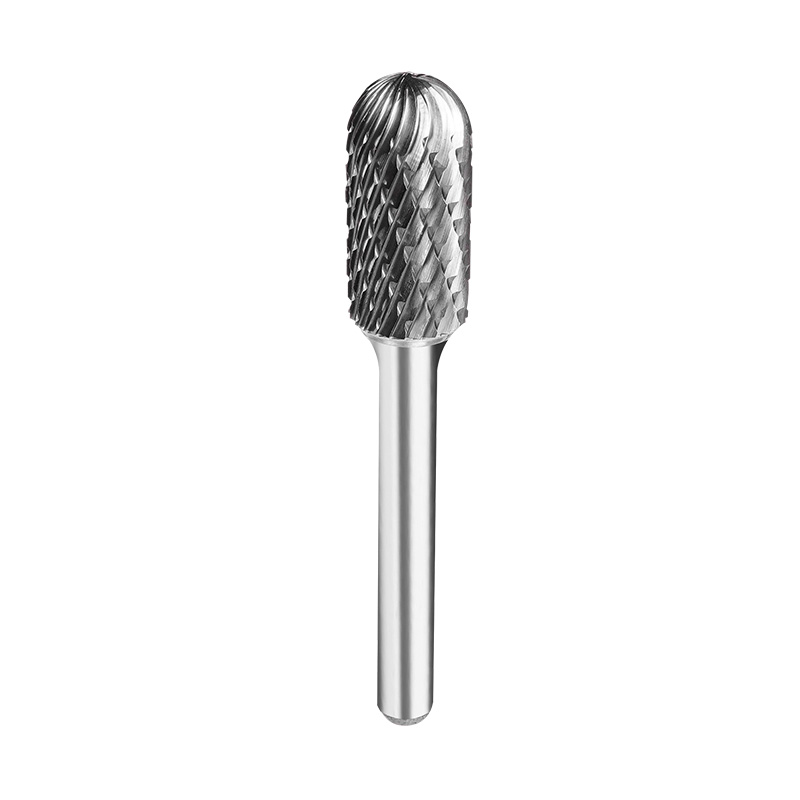
| Cylindrical with radius end | Surface shaping and controlled edge work |
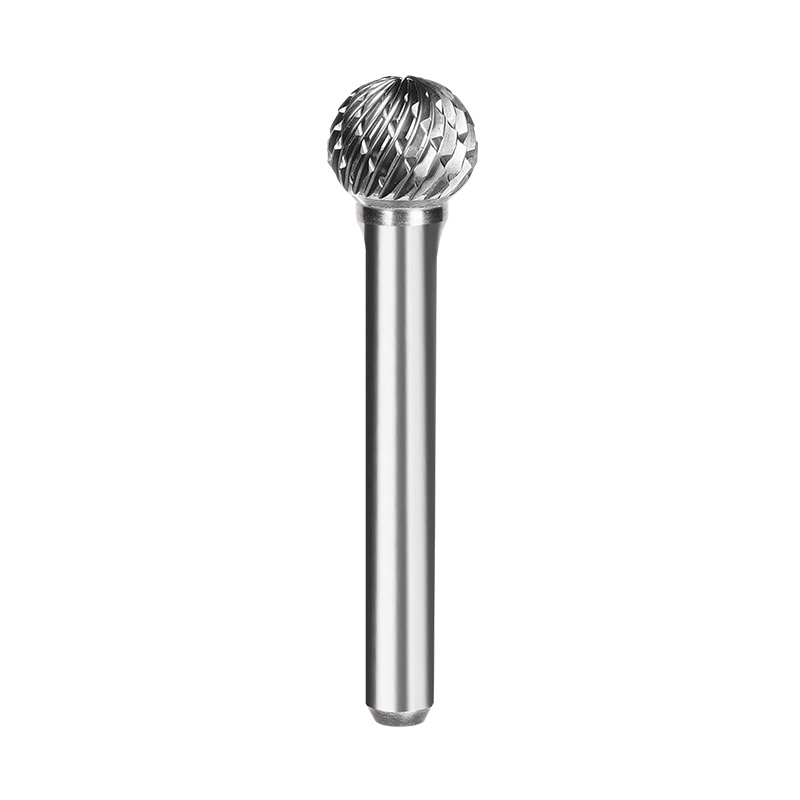
| Ball | Grooves, concave areas, blending and cavity work |
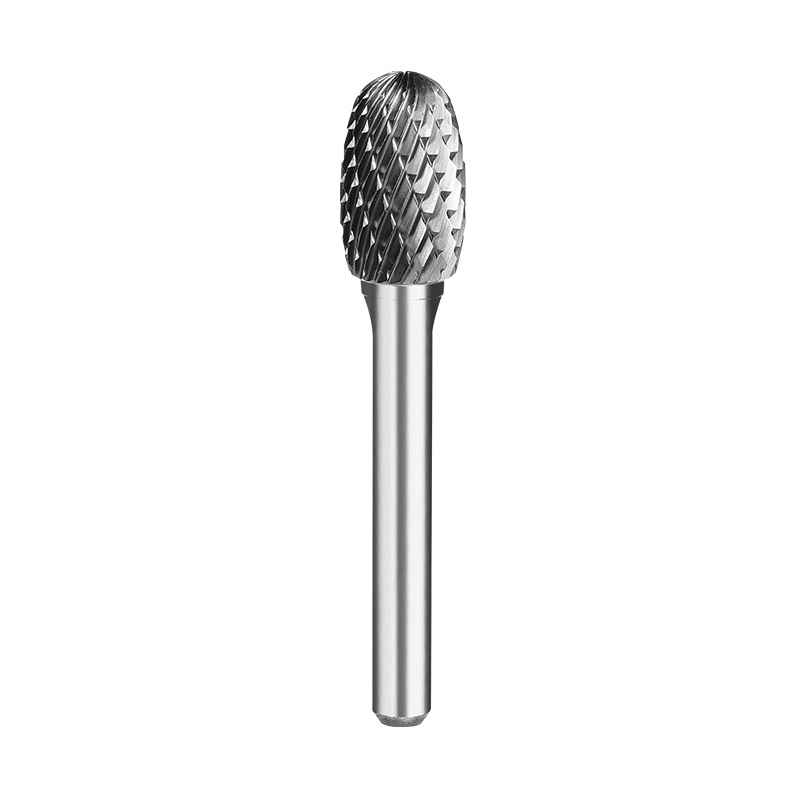
| Oval | Curved surfaces and transitions |
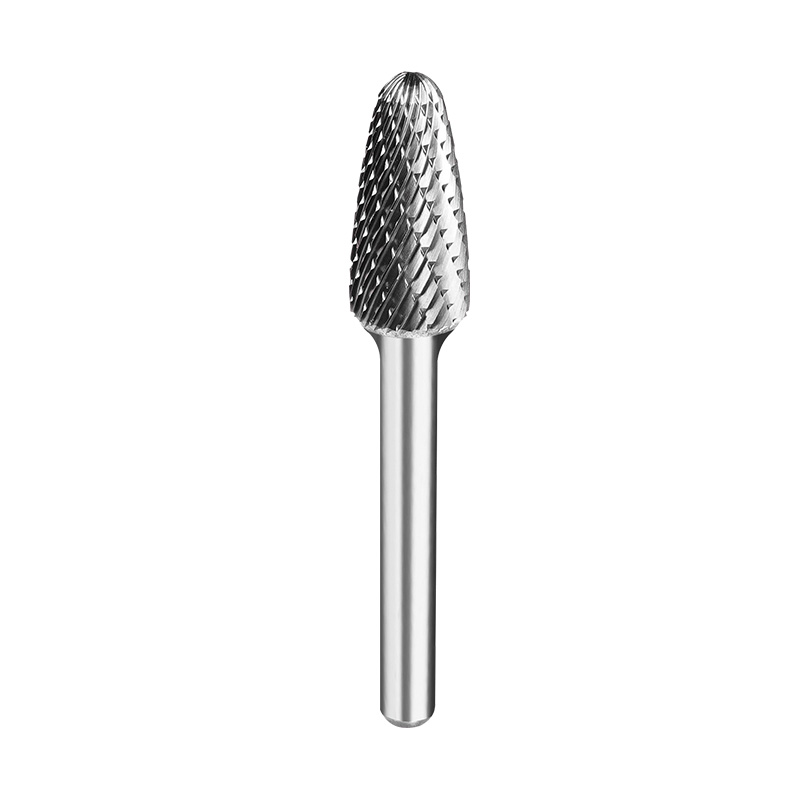
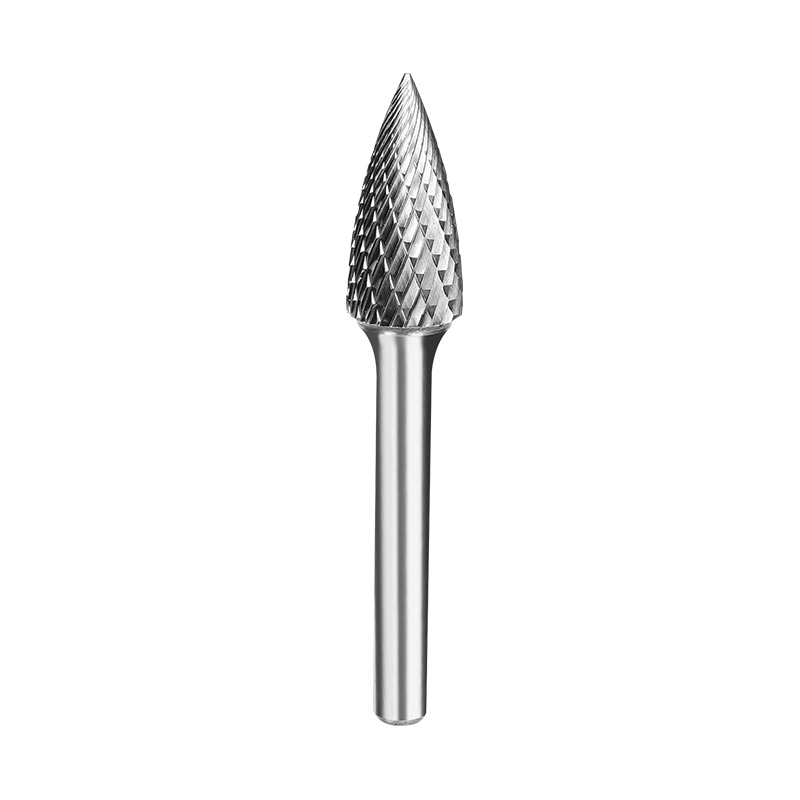
| Tree | Contoured surfaces and narrow areas |
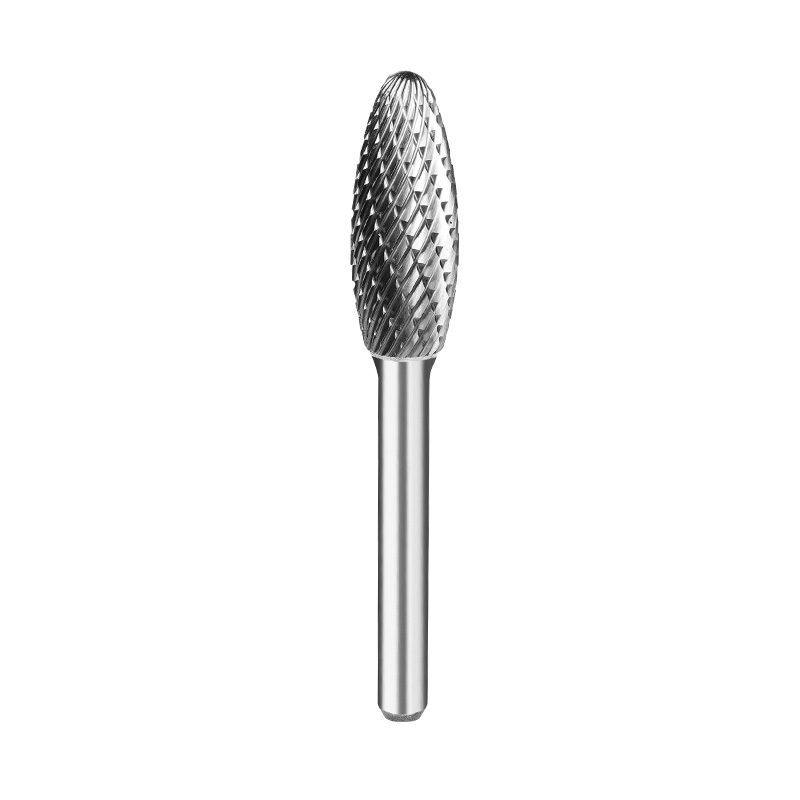
| Flame | Grooves, radii, and detailed contouring |
| Taper | Angled surfaces, slots, and restricted access |
The best shape depends on the geometry of the workpiece.
For example, a ball-shaped carbide burr may be more convenient for creating or enlarging a rounded cavity, while a cylindrical burr can provide better control on relatively flat surfaces.
For OEM production, it can be useful to standardize several burr shapes according to recurring component geometries instead of allowing operators to select tools entirely by trial and error.
A production team can use a simple checklist to reduce loading:
| Checkpoint | Recommended Action |
|---|---|
| Burr selection | Use a suitable aluminum/non-ferrous cut |
| Burr condition | Replace excessively worn or damaged tools |
| RPM | Match speed to burr diameter and manufacturer specifications |
| Pressure | Use controlled pressure and avoid forcing the cut |
| Lubrication | Use an appropriate aluminum-compatible cutting aid when required |
| Movement | Keep the burr moving during material removal |
| Cleaning | Remove accumulated aluminum before it significantly affects cutting |
| Tool inspection | Check the burr and grinder before production |
| Workholding | Secure the workpiece to reduce vibration |
| Operator training | Establish consistent cutting procedures |
These steps are especially important when multiple operators perform the same task. A standardized process can reduce differences in tool life and surface quality between workstations.
What to Do When a Carbide Burr Is Already Clogged
If aluminum has already packed into the cutting flutes, pushing through it will only make things worse.
First, kill the power to the rotary tool and wait for it to come to a complete stop. Seriously, never try to clean a burr while it’s still spinning.
After popping it out of the collet, check the cutting head for:
If the burr looks okay structurally and is just gummed up, you can try cleaning the aluminum out using whatever method the manufacturer recommends.
Just make sure the cleaning method matches the carbide grade and any special coating on the tool. Production teams shouldn't go tossing random chemicals at it without checking compatibility and safety rules first.
And remember, if a burr is actually cracked or damaged, don't think it’s good to go just because you picked the visible aluminum out. Running a compromised tool at high speeds is asking for trouble.
How Carbide Burr Quality Affects Aluminum Processing
For industrial buyers, the shape and consistency of the burr are a huge deal.
Two burrs might look identical on paper with the same diameter, but they won't give you the same results if their flute angles, carbide quality, grinding precision, or concentricity are even slightly off.
When you're vetting a carbide burr supplier, B2B buyers should ask about:
For recurring shop orders, sample testing is your best friend. A practical test will compare material removal rates, surface finish, tool heat, how often it clogs, and total tool life under your actual working conditions.
That'll give you way more useful data to make a buying decision than just looking at the tool's appearance or unit price.
Safety Considerations When Using Carbide Rotary Burrs
These burrs spin at crazy high speeds and can easily turn broken chips or fragments into flying shrapnel if something fails.
Operators always need to stick to the safety guidelines from the tool and grinder makers. That means wearing full eye and face protection, locking down the workpiece, watching your clothing, and making sure the machine itself is in good shape.
When you load the burr, make sure the shank is buried deep and secure in the collet, just like the manual says. Also, give your grinder a quick check—if the bearings are worn out or it’s vibrating like crazy, fix that first.
And never exceed the rated RPM of the burr or rotary tool.
People usually mess this up when switching between different sizes. A high speed that works perfectly for a small burr can easily destroy a much larger cutting head.
A Practical Aluminum Carbide Burr Selection Process
If you're buying these tools in bulk for production, following a straightforward process can save you a lot of trial-and-error.
First, know your material and part geometry.
Next, figure out the main job: deburring, cleaning up welds, opening up slots, shaping, edge prep, cavity work, or blending surfaces.
Then select the right burr shape and a flute design engineered specifically for aluminum or non-ferrous metals.
After that, dial in your operating RPM based on the burr's diameter and the supplier's specs.
Finally, test the setup on your actual production line.
The numbers you really want to track include:
This approach lets procurement and engineering teams evaluate carbide burrs based on real production performance, rather than just the price tag.
Frequently Asked Questions About Carbide Burrs for Aluminum
Can you use a carbide burr on aluminum?
Yeah, absolutely. They’re used all the time for deburring, shaping, weld cleanup, and hogging off material. But if you want a smooth ride, you really want an aluminum-specific or non-ferrous cut to help clear chips and prevent clogging.
Why does my carbide burr keep clogging with aluminum?
Usually, it’s a mix of the wrong flute geometry, too much heat, wrong RPM, shoving the tool too hard, or just poor chip clearance. Aluminum-specific burrs have wider, open flutes to stop the metal from packing in.
Is a double-cut carbide burr good for aluminum?
It can work in a pinch, but a standard double-cut burr isn't the best choice for everyday aluminum work. If clogging is a constant issue, you're much better off with a dedicated aluminum cut.
What RPM should I use for an aluminum carbide burr?
There's no single "magic number." It all depends on how big the burr is, the flute style, and your specific grinder. Always check the recommended operating range and max speed before you start production.
How can I make a carbide burr last longer when cutting aluminum?
Use the right aluminum-specific geometry, keep the RPMs where they belong, don't bear down too hard, control the heat, keep the tool moving, use lube if the job allows, and toss out worn-out tools.
What should manufacturers consider when buying carbide burrs for aluminum?
Buyers need to look past the unit price. Things like carbide grade, flute design, dimensional consistency, concentricity, and supplier quality control all play a huge role in the total cost of your machining operation.
Build a More Consistent Aluminum Deburring Process
At the end of the day, a smooth aluminum deburring process comes down to the whole system working together—the tool geometry, your speed, the pressure you apply, lubrication, and how the operator handles the tool.
If your burrs are constantly turning into solid blocks of aluminum, the first step is to look at your setup and tool choice. Switching to a proper non-ferrous burr, backing off the pressure, and dialing in the RPM can usually fix the root cause.
For industrial lines, the best tool is the one that gives you reliable cutting performance day in and day out on your shop floor. Testing out a few different shapes on actual parts is the quickest way to find a consistent setup and stop burning through your tooling budget.
Cooperate with us now
contact Us
Characteristic Industrial Park, Furong Town, Yueqing City, Zhejiang Province, China.
+86-13757799073
+86-13587713956

Wholesale Carbide Rotary Burs Factory