 English
 Español
 Inquiry
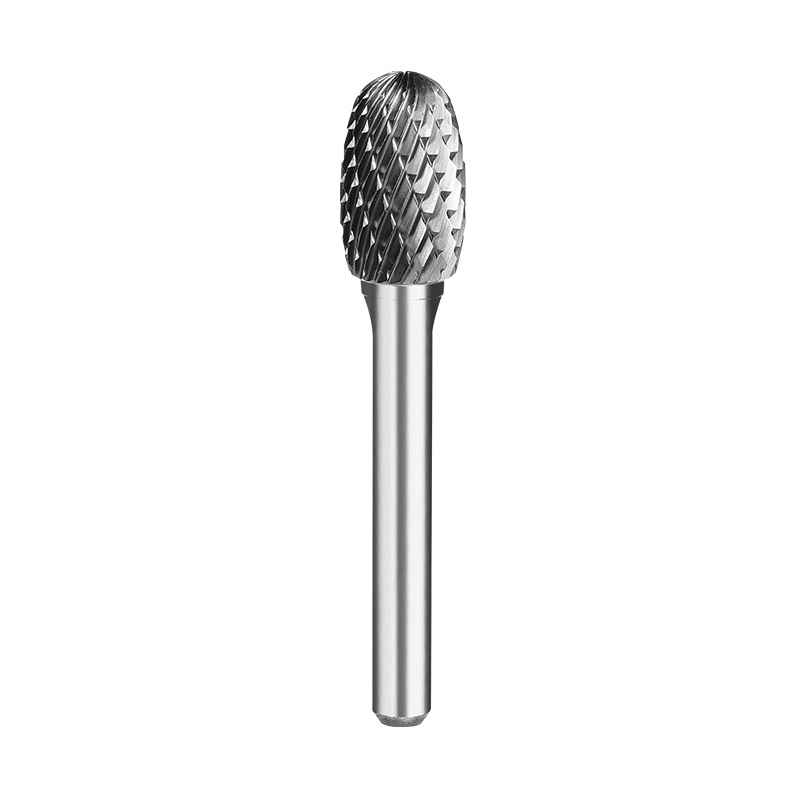
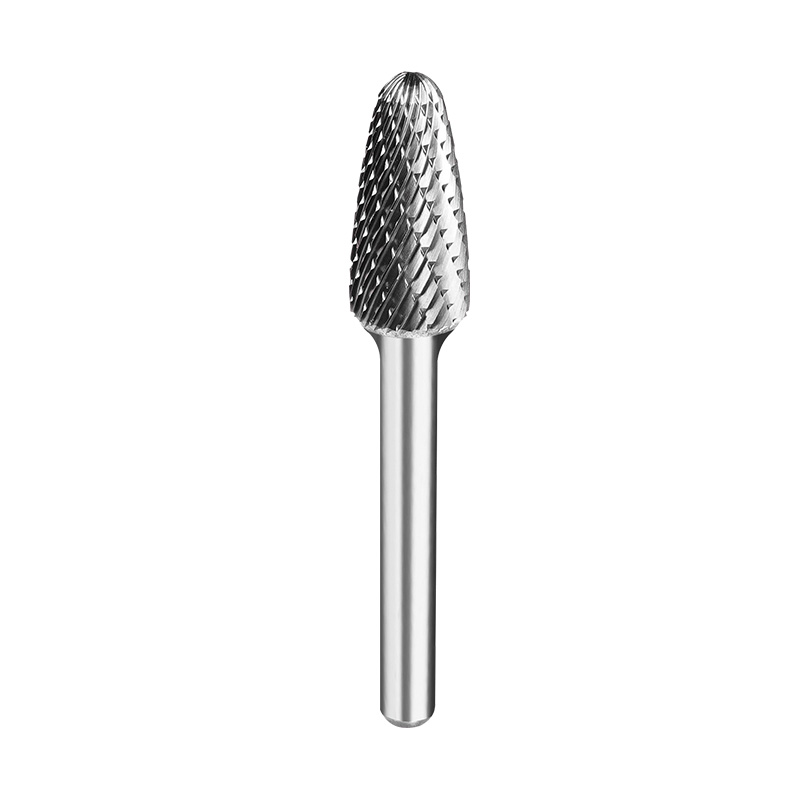
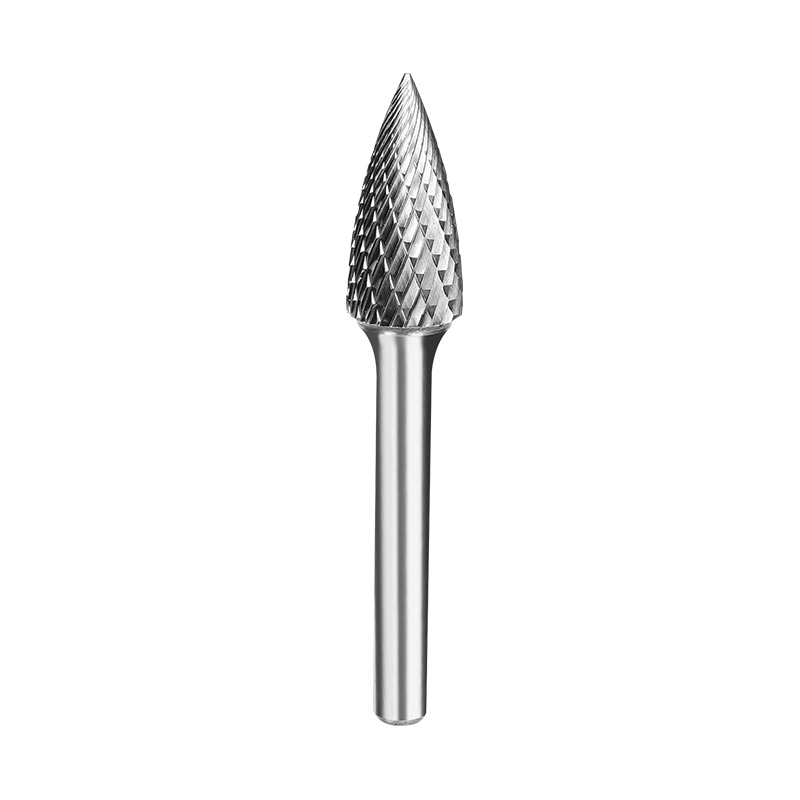
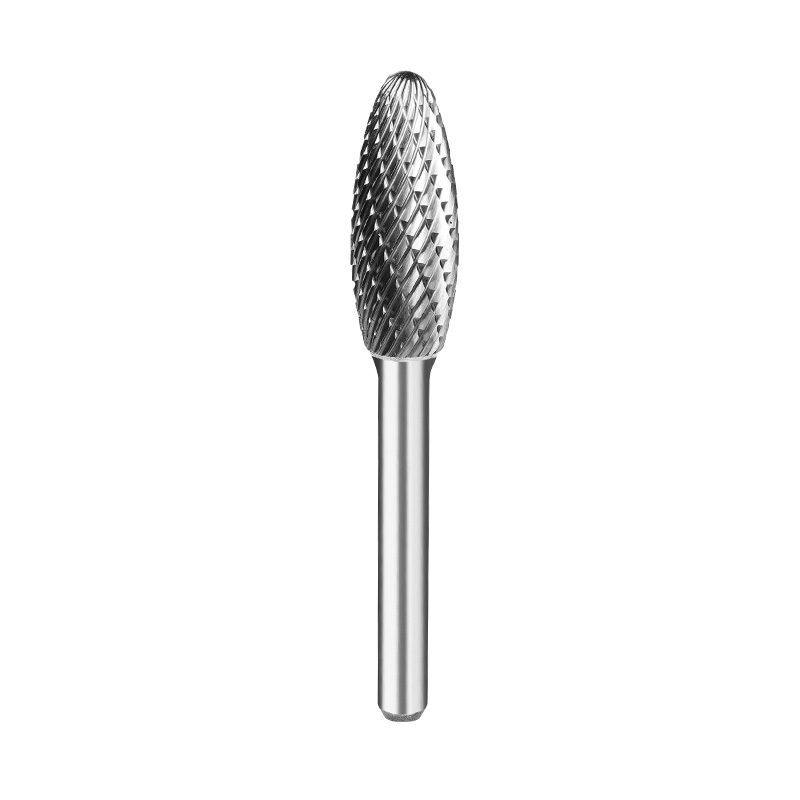
Carbide rotary burs are versatile cutting tools widely used in metalworking, woodworking, and industrial applications. They are valued for their durability, precision, and ability to remove material efficiently. One of the critical factors influencing their performance is shape. The shape of a rotary bur determines the type of cut it produces, the speed of material removal, and the finish quality on the workpiece. Choosing the correct shape can optimize productivity and ensure high-quality results, whether for roughing, finishing, or deburring operations.
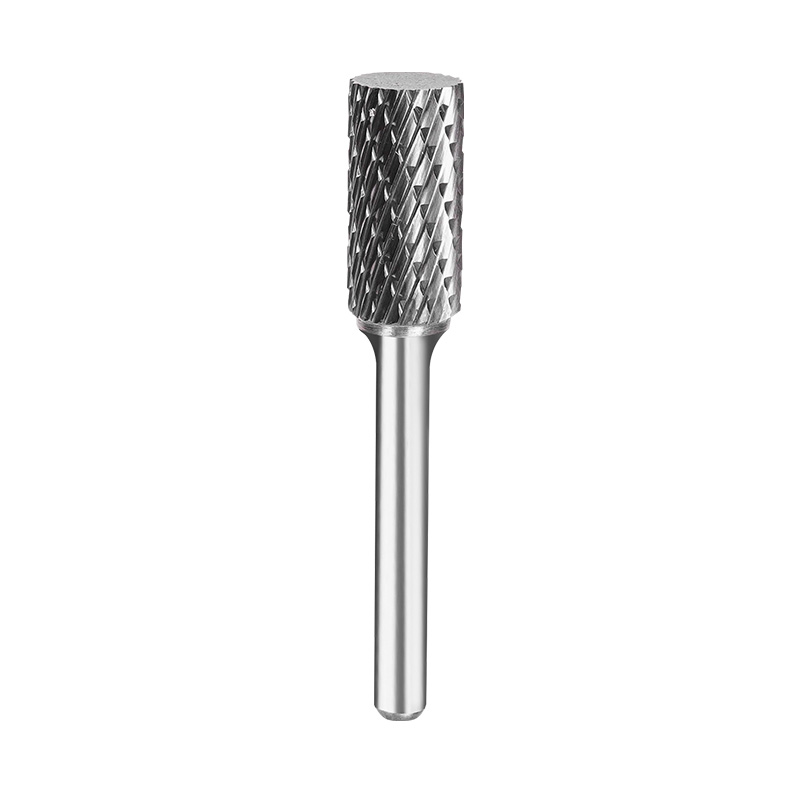
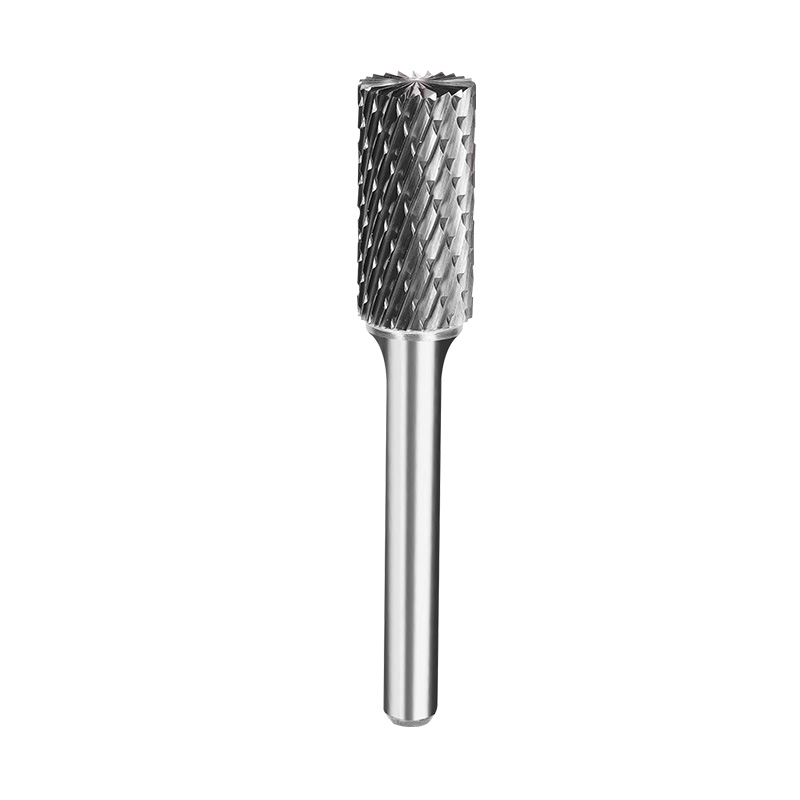
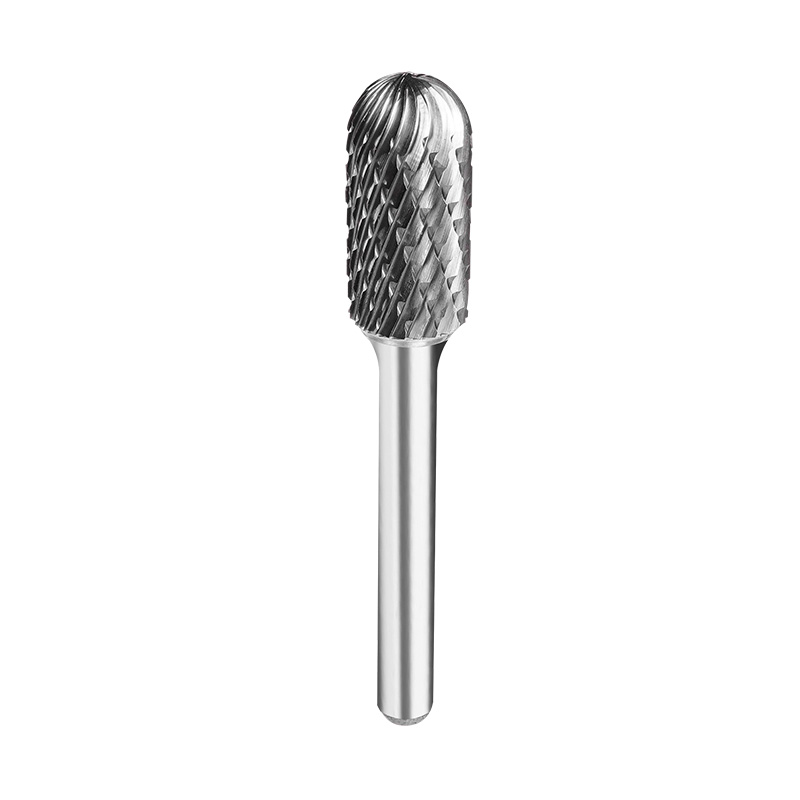
Cylindrical burs feature a straight, elongated body and are ideal for flat surfaces and straight edges. They provide consistent contact along the cutting length, making them suitable for grinding or shaping metal plates, removing welds, or preparing surfaces for further machining. The straight design allows operators to maintain precise control over depth and alignment, producing smooth, even surfaces. Cylindrical burs with a flat end are particularly effective for surface leveling and achieving a uniform finish, while cylindrical burs with a rounded tip can handle slightly contoured surfaces without leaving sharp edges.
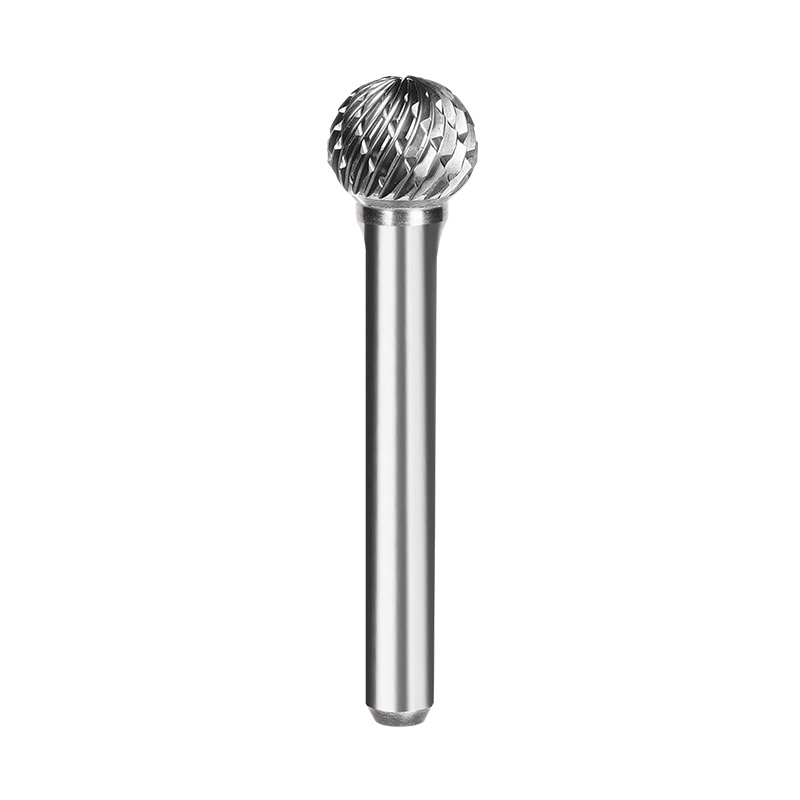
Ball-shaped rotary burs are spherical and excel at shaping concave surfaces, rounded grooves, and complex contours. Their rounded geometry allows for smooth transitions and risk of gouging the material. They are particularly useful for detailed work in mold-making, jewelry, and aerospace applications where precise curvature is essential. Because the cutting edges are distributed evenly around the sphere, these burs can approach the workpiece from multiple angles, offering flexibility in intricate machining tasks. They are less suited for flat surface work, where contact with only a small portion of the sphere may reduce material removal efficiency.
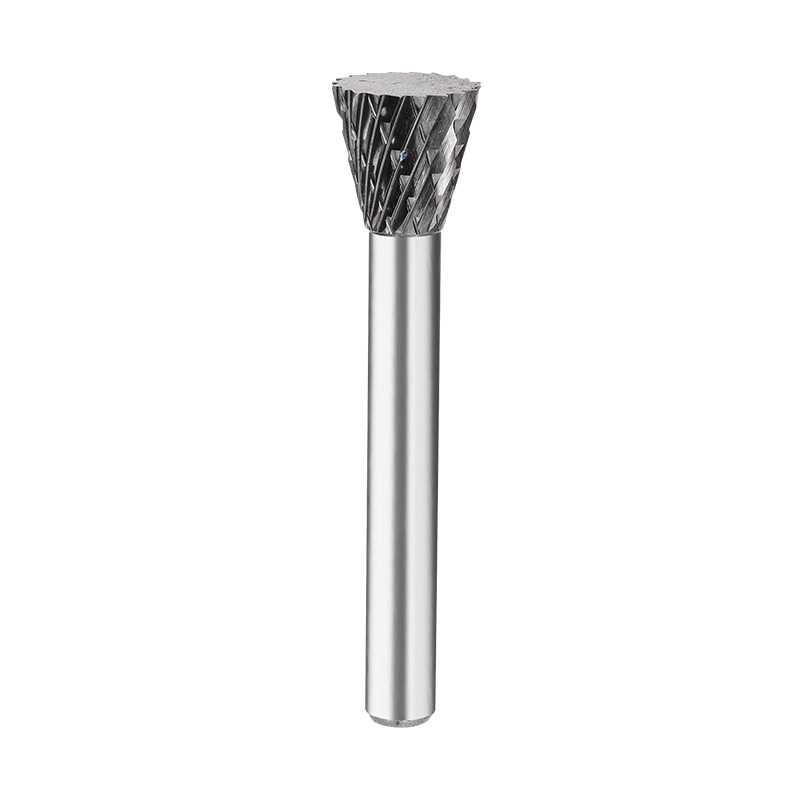
Tapered or inverted cone-shaped burs are designed for operations requiring angled cuts or access to tight spaces. The pointed geometry allows for engraving, chamfering, and cutting V-shaped grooves with precision. These burs are ideal for fine detailing, corner work, and edge preparation where other shapes may be too bulky. Their tapered design also provides better visibility during machining, enabling operators to follow precise lines or contours. In metalworking, they are frequently used for deburring internal corners and creating smooth transitions between surfaces.
The shape of a rotary bur affects both the rate of material removal and the surface finish. Cylindrical burs improve contact for efficient removal on flat surfaces but may leave linear tool marks if not properly handled. Ball-shaped burs distribute cutting forces over a larger area, reducing chatter and creating smoother curves. Tapered and inverted cone burs concentrate force at the tip, allowing detailed cuts but requiring careful control to avoid gouging. Understanding how each shape interacts with the material is essential for selecting the appropriate tool for a given task, ensuring both efficiency and quality.
Selecting the correct shape also depends on material type, machine speed, and the specific operation. Hard metals may benefit from high-speed steel or tungsten carbide burs with shapes optimized for chip clearance. Softer metals or plastics may require different shapes to prevent clogging or deformation. Operators should also consider the ergonomics of tool handling and access to the workpiece. A combination of shapes is often employed in a workshop to address varying machining requirements, making a well-stocked set of carbide rotary burs an essential investment for precision work.
The shape of carbide rotary burs plays a decisive role in machining performance. Cylindrical, ball-shaped, and tapered burs each offer unique advantages tailored to specific tasks, from flat surface leveling to intricate contouring and precise angle cuts. Understanding the influence of shape allows operators to select the effective tool for each application, optimizing both efficiency and finish quality. Incorporating the right shapes into your workflow ensures consistent results, reduced material waste, and enhanced overall productivity.
Cooperate with us now
contact Us
Characteristic Industrial Park, Furong Town, Yueqing City, Zhejiang Province, China.
+86-13757799073
+86-13587713956

Wholesale Carbide Rotary Burs Factory