 English
 Español
 Inquiry
Solid carbide drills are widely used in precision machining work where even small differences in tool behavior can change the final result. Buyers often expect every drill in a batch to feel the same during use. That expectation sounds simple, but in production it requires careful control across many steps.
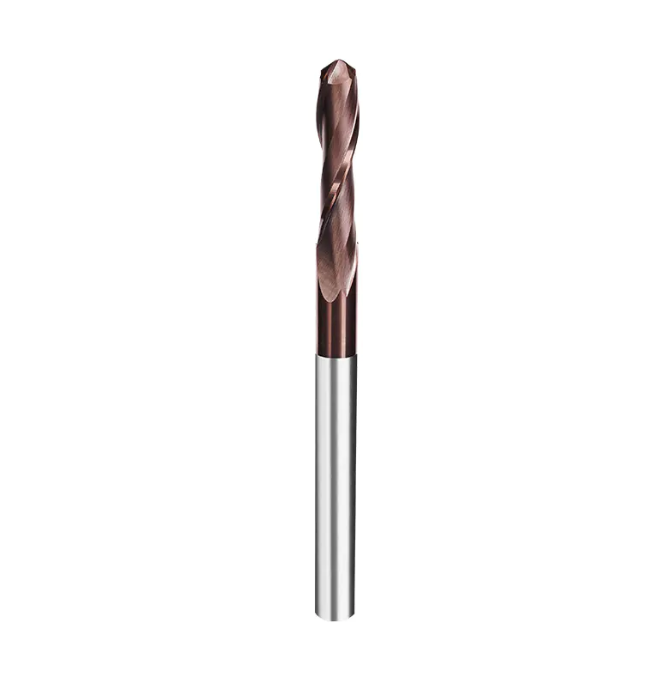
Consistency is not created at a single point. It is built gradually, from raw material handling to final packaging. Each stage adds a layer of stability, and each layer helps reduce variation.
Machining workshops put cutting tools under constant heat and heavy force. The drill tip has to perform reliably no matter what workpiece material it meets. If separate drills from the same line act differently, operators can't count on steady machining results.
Uniform production standards deliver multiple practical benefits:
For shop owners buying these tools, consistent output cuts down the time spent tweaking machine settings. For drill manufacturers, steady uniformity proves they can fully control every step of their production process.
Everything starts with material selection. Even before shaping begins, manufacturers focus on the stability of the raw input.
Key attention points include:
If the material varies too much at the beginning, later stages cannot fully correct it. That is why early preparation is treated as a control point rather than a simple supply step.
Materials are often grouped and managed in controlled sets to avoid mixing differences during production.
After raw carbide material gets prepped, it goes through forming steps to build the drill's finished outline.
Workers and machinery focus on these key points at this stage:
Tiny off-kilter shaping flaws might not be visible to the naked eye, yet they alter how the drill cuts once put into service.
Factories regularly calibrate all forming gear to hold consistent working conditions, so every piece gets shaped the exact same way.
Heat treatment rewrites the internal metal makeup of each drill bit, boosting hardness and service life. Poor handling here easily creates uneven tool performance.
Producers stick to strict controls covering:
Uneven heat distribution leaves slight structural differences between individual drills. Those gaps change how each tool holds up under heavy cutting loads.
To keep everything uniform, manufacturers split raw tools into small, tightly managed processing groups instead of running huge unregulated batches all at once.
After forming and heat treatment, drills go through surface polishing. This step changes more than just their outward appearance.
A smooth, uniform surface brings real working advantages:
Finishing is split into several separate steps. Each pass removes tiny blemishes left by earlier production work.
Even faint uneven spots on the surface change how the drill performs during long continuous machining runs.
Quality checks don't only take place at the very end of production. Tests are carried out at every key production phase.
Main inspection checkpoints in the workflow:
Every checkpoint tests different product features. Flaws caught early won't move on to later processes, and final checks ensure all finished drills meet uniform standards.
This layered testing method stops inconsistent products from being sent to customers.
Measuring tools confirm each drill meets required specifications. Tiny geometric differences will affect actual cutting results.
Factories follow these measurement habits:
Instead of relying on a single measurement result, multiple rounds of testing ensure stable output and find hidden dimensional differences.
Design structure also influences consistency. When tools follow a stable design pattern, production becomes easier to manage.
Standardized design helps:
Even with standard designs, small variations may still be adjusted based on application needs, but the base structure remains controlled.
Batch control is a common method to keep production stable. Instead of producing items individually without grouping, solid carbide drill manufacturers organize output into controlled sets.
This approach helps:
If variation appears later, batch grouping also makes it easier to trace where changes may have occurred.
| Production stage | Main focus | Contribution to consistency |
|---|---|---|
| Material preparation | Raw stability | Sets foundation for uniform behavior |
| Shaping process | Geometry control | Ensures structural balance |
| Heat treatment | Hardness control | Keeps cutting performance stable |
| Surface finishing | Smoothness | Improves wear behavior |
| Inspection process | Multi-stage checking | Detects variation early |
| Batch control | Production grouping | Reduces differences between units |
Even after production, handling still matters. Improper storage can affect surface condition or lead to small physical changes over time.
Manufacturers usually focus on:
These steps help ensure that products delivered to users remain in stable condition.
One stage alone cannot guarantee consistent quality. Even if one process is highly controlled, variation can still appear if other stages are not aligned.
For example:
That is why manufacturers focus on the full process chain rather than isolated improvements.
Even with control systems, small variation can still happen. When it does, manufacturers typically:
This response helps maintain stability over time instead of reacting only at the final stage.
Why is consistency difficult to achieve?
Because multiple production stages affect final performance, and small changes in any stage can influence results.
Does automation guarantee uniform quality?
It helps reduce variation, but process control and inspection are still necessary.
Why are multiple inspections needed?
Different stages reveal different types of variation, so repeated checks improve reliability.
How does batch control help production?
It keeps conditions stable within groups and reduces differences between outputs.
Can design standardization improve consistency?
Yes, it helps reduce structural differences and makes production more stable.
Cooperate with us now
contact Us
Characteristic Industrial Park, Furong Town, Yueqing City, Zhejiang Province, China.
+86-13757799073
+86-13587713956

Wholesale Carbide Rotary Burs Factory