 English
 Español
 Inquiry
When comparing an Industrial Rotary Tool with common handheld power tools such as electric drills and angle grinders, it is important to understand that each tool is designed with different priorities in mind. Handheld drills are primarily built for drilling holes and driving fasteners, while angle grinders focus on aggressive cutting, grinding, and surface preparation. An Industrial Rotary Tool, by contrast, is engineered for precision, versatility, and controlled material removal, making it especially valuable in industrial and professional environments where accuracy and flexibility matter more than raw power.
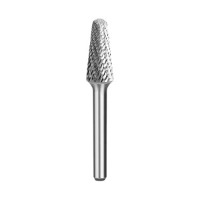
One of the significant advantages of an Industrial Rotary Tool is its exceptional level of precision. Unlike drills or angle grinders, which often operate at lower control resolution or higher torque, rotary tools are designed to run smoothly at high speeds with fine control. This allows operators to perform delicate tasks such as engraving, deburring, polishing, and fine cutting without damaging surrounding material. The slim body design and balanced motor housing further enhance hand control, reducing the risk of slips or uneven finishes.
Another major benefit lies in versatility. While a handheld drill is limited mainly to drilling and fastening, and an angle grinder is typically restricted to cutting and grinding, a rotary tool can perform a wide range of operations simply by changing accessories. From cutting thin metal sheets and shaping plastic components to sanding wood and polishing molds, one tool can replace several specialized machines. This adaptability makes it especially useful in workshops where space efficiency and workflow flexibility are important.
Rotary tools are known for their high rotational speeds, which are often significantly higher than those of drills or grinders. This high-speed operation is ideal for working on delicate or thin materials where slower, high-torque tools might cause cracking, tearing, or excessive heat buildup. The controlled speed range enables clean edges and smooth finishes, particularly when working with composites, electronics housings, or precision metal parts.
Compared with angle grinders, which can be heavy and produce strong vibration, rotary tools are generally lightweight and ergonomically designed. This reduces operator fatigue during extended use and allows for better maneuverability in tight or complex work areas. The reduced vibration also contributes to more accurate results, as the operator can maintain a steady hand for longer periods without loss of control.
Safety is another area where rotary tools offer an advantage. Angle grinders, while powerful, can be dangerous when used for fine or intricate tasks due to their aggressive cutting action and potential for kickback. Rotary tools operate with smaller accessories and controlled contact areas, lowering the risk of sudden tool movement. This makes them safer for precision tasks such as trimming, detailing, or finishing operations that require close attention and accuracy.
Consistency and Reliability in Industrial Use
In industrial settings, consistency is essential. Rotary tools are often designed for continuous operation with stable speed control, ensuring uniform results across multiple parts or production cycles. This reliability is particularly valuable in manufacturing, mold making, and maintenance work, where repeatable precision directly affects product quality. Many professionals prefer sourcing equipment from a reputable Industrial Rotary Tool supplier to ensure durability and consistent performance under demanding conditions.
It is important to note that rotary tools do not completely replace drills or angle grinders. Instead, they complement them. Drills remain good for heavy-duty drilling and fastening, while angle grinders excel at rapid material removal and large-scale cutting. However, when tasks require finesse, detail, and adaptability, rotary tools clearly stand out as the better choice.
The main advantages of an Industrial Rotary Tool over handheld drills and angle grinders lie in its precision, versatility, ergonomic design, and suitability for fine-detail work. By offering high-speed control, reduced fatigue, and safer operation for delicate tasks, rotary tools fill an essential niche in both industrial and professional workshops. Choosing the right tool for the job ultimately causes higher efficiency, better results, and improved overall productivity.
Cooperate with us now
contact Us
Characteristic Industrial Park, Furong Town, Yueqing City, Zhejiang Province, China.
+86-13757799073
+86-13587713956

Wholesale Carbide Rotary Burs Factory