 English
 Español
 Inquiry
Carbide drill manufacturers are part of a production chain that often goes unnoticed, but their influence shows up in almost every machining environment. From metal workshops to industrial assembly lines, drilling tools are used constantly. Behind each stable tool, there is a long process of preparation and adjustment.
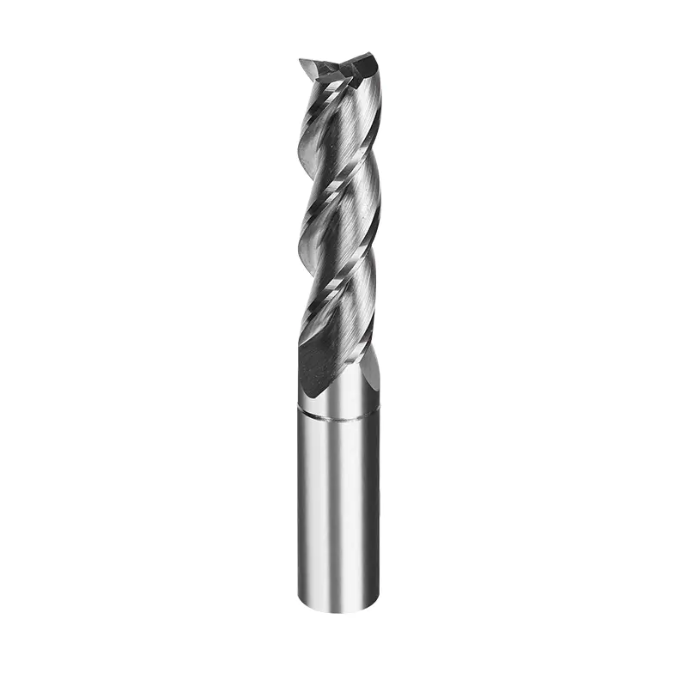
Their work is not only about producing a drill. It is about shaping how that drill behaves once it enters real use. Stability, resistance, and smooth operation all come from decisions made during manufacturing.
In practice, the process is less linear than it may seem. It moves through material handling, shaping, surface refinement, and repeated checking. Each step affects the next one.
At a basic level, the manufacturer produces cutting tools designed for hard and repetitive work.
But that description is only the surface. The real responsibility is closer to controlling behavior rather than only forming shape.
A drill is expected to rotate smoothly, stay stable under pressure, and maintain its structure over time. These expectations guide every stage of production.
Different industries use drills in different ways. Some applications involve continuous use. Others require short but intense operations. Manufacturers need to account for this range during design and production planning.
Instead of building one fixed outcome, they aim for controlled consistency.
Everything begins with material preparation. This stage quietly determines how the rest of the production will unfold.
Carbide-based materials are chosen for their stability under stress. They hold shape well and do not deform easily during operation. That stability is important for cutting tools.
Still, raw material is never used directly. It must be prepared, adjusted, and processed before shaping begins.
Small differences in material consistency can later affect cutting behavior, heat response, and structural stability. Because of this, preparation is handled with attention rather than speed.
In many factories, this stage is less visible but highly important.
Once materials are prepared, they move into forming stages.
This is where the drill begins to take its recognizable shape. The tip is defined, the body is structured, and the basic geometry is established.
The process is not completed in a single step. It often moves through gradual refinement. Each adjustment slightly improves alignment and balance.
At this point, small changes carry more weight than before. A minor shift in structure can influence rotation stability later on.
It is a stage where control matters more than output speed.
After raw materials are properly processed and ready, production moves on to forming and shaping work.
This is when a drill slowly takes its typical finished‑product shape. The cutting tip gets its defined form, the main body is built out, and all basic structural dimensions are set in place.
Shaping never happens all at once. It relies on steady step‑by‑step refining. Every small tweak fine‑tunes alignment and overall balance bit by bit.
At this manufacturing phase, tiny adjustments make a big difference down the line. Even a slight structural misalignment can affect how smoothly the drill spins during real‑world use later on.
For this reason, precision control is far more important than rushing through production to hit faster output speeds.
Precision is not handled at one fixed point. It runs through the entire process.
From early material handling to final adjustments, measurements are checked repeatedly. The aim is not perfection in a single step, but consistency across all stages.
Even small variations can affect how the tool behaves once it is used repeatedly.
Because of this, manufacturers tend to focus more on stable patterns than isolated results. A steady output is often more valuable than occasional improvements.
Before tools are fully released, they are usually tested in controlled environments.
These tests focus on how the tool behaves rather than how it looks. Rotation, resistance, and stability are observed closely.
The goal is to see whether the tool behaves in a predictable way under working conditions.
If something appears inconsistent, adjustments may be made before production continues. This step is often repeated more than once.
Over time, the tool reaches a state where its behavior becomes steady and repeatable.
Final performance is shaped by multiple connected factors.
Each one plays a role, and none of them works alone.
| Factor | Practical influence |
|---|---|
| Material stability | Supports long-term durability |
| Structural shaping | Affects movement during use |
| Surface condition | Influences smooth contact |
| Process consistency | Maintains repeatable output |
In real production, these factors interact continuously. A small change in one area can shift the overall behavior of the tool.
In real use, users expect the same behavior every time they pick up a tool.
If performance changes too much between batches, reliability becomes difficult to maintain.
Because of this, manufacturers focus heavily on keeping output stable across time.
Consistency does not mean avoiding change completely. It means controlling change so it stays within a predictable range.
This is often more important than pushing for isolated improvements.
Carbide drills are used across many environments. Each environment has slightly different expectations.
Some require long wear resistance. Others need smoother cutting behavior. These differences influence production decisions.
Manufacturers adjust structure and processing methods depending on intended use. However, these changes are usually subtle rather than dramatic.
The core production system remains stable, while small details shift to match application needs.
Monitoring is present throughout production, not just at the end.
It begins when material enters the process and continues until final inspection.
At each stage, changes in structure or behavior are observed. If something shifts unexpectedly, corrections can be made early.
This continuous attention helps prevent larger inconsistencies later in the process.
In many cases, small adjustments during production are more effective than large corrections afterward.
Modern industry relies heavily on repeatable tools. Machines and operators expect stable performance over long cycles.
Carbide drill manufacturers support this expectation by focusing on controlled production behavior rather than single-output performance.
Their role connects material handling, structural design, and real-world application needs.
As industrial requirements continue to evolve, manufacturing methods adjust gradually, without changing the core logic of production.
Carbide drill manufacturing is best understood as a connected process rather than separate steps.
Material preparation influences shaping. Shaping affects surface treatment. Surface condition affects final behavior.
Each stage builds on the previous one. Nothing exists in isolation.
The final goal is simple in concept, even if complex in execution: produce a tool that behaves in a stable and predictable way during real use.
Cooperate with us now
contact Us
Characteristic Industrial Park, Furong Town, Yueqing City, Zhejiang Province, China.
+86-13757799073
+86-13587713956

Wholesale Carbide Rotary Burs Factory